Synthflow is one of the better-known names in the no-code voice AI space. It launched in 2023, built a strong reputation among agencies deploying white-label AI phone agents at scale, and consistently shows up in comparisons as a serious platform.
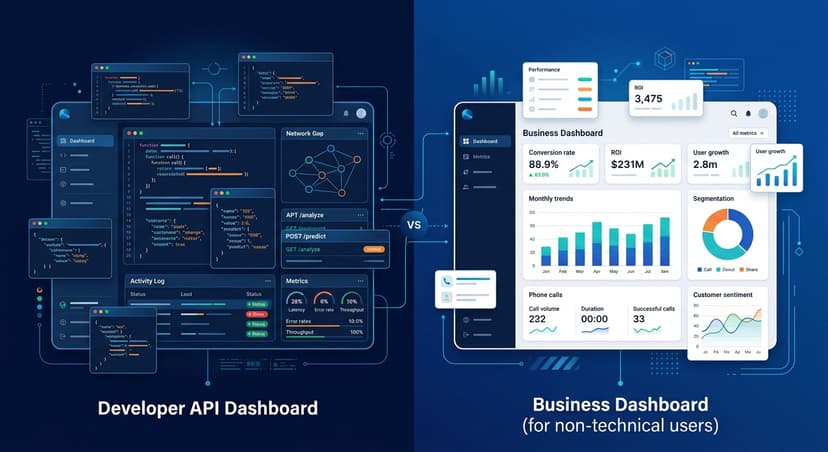
But here's the problem: Synthflow was built for agencies and developer teams — not small business owners trying to stop missing calls. The pricing structure, the setup complexity, and the ongoing cost unpredictability all reflect that. If you're a plumber, a roofer, a dental practice, or any other small business owner looking for an AI receptionist that just works, Synthflow will frustrate you long before it helps you.
Revenue Squared AI was built for the other side of that equation — the business owner who needs 24/7 call coverage, transparent pricing, and zero engineering overhead. Here's the full comparison.
01Quick Verdict
Synthflow is the right choice if you're an agency deploying white-label AI phone agents for multiple clients and you have a technical team that can manage API keys, LLM providers, and voice engine integrations.
Revenue Squared AI is the right choice if you own or operate a small business and need an AI receptionist that answers every call, books appointments, qualifies leads, and improves over time — without a developer, without hidden costs, and without a learning curve.
If you want to skip the breakdown and just see it in action, start a free trial here.
02At a Glance
| Feature | Revenue Squared AI | Synthflow |
|---|---|---|
| Starting price | $147/month | $0.09/min (pay-as-you-go) |
| Included minutes | Yes — predictable monthly | No — pure per-minute |
| Hidden provider costs | None | Yes — separate LLM + voice + telephony fees |
| Real monthly cost (moderate usage) | $147–$497/month | $300–$800+/month |
| Setup time | Under 5 minutes | Days to weeks |
| Prompt engineering required | No | Yes |
| White-label support | No (not an agency tool) | Yes — core feature |
| Self-improving AI | Yes — Sales Manager AI | No |
| Voice cloning | Yes (Pro/Growth) | Yes (via ElevenLabs BYOK) |
| Concurrent calls | Up to 20 | 5–unlimited (tier-based) |
| CRM integrations | GHL, HubSpot, Salesforce, Zapier | GoHighLevel, HubSpot, Zapier |
| Google Calendar | Yes | Yes |
| Appointment booking | Built-in | Built-in |
| HIPAA compliant | Yes | Enterprise only |
| No annual contract | Yes | Yes |
| Support | Karina AI + direct (Pro) | Ticketing (30-day Slack onboarding) |
| Target user | Small business owners | Agencies, dev teams |
03The Pricing Problem with Synthflow
This is where most small business owners get burned.
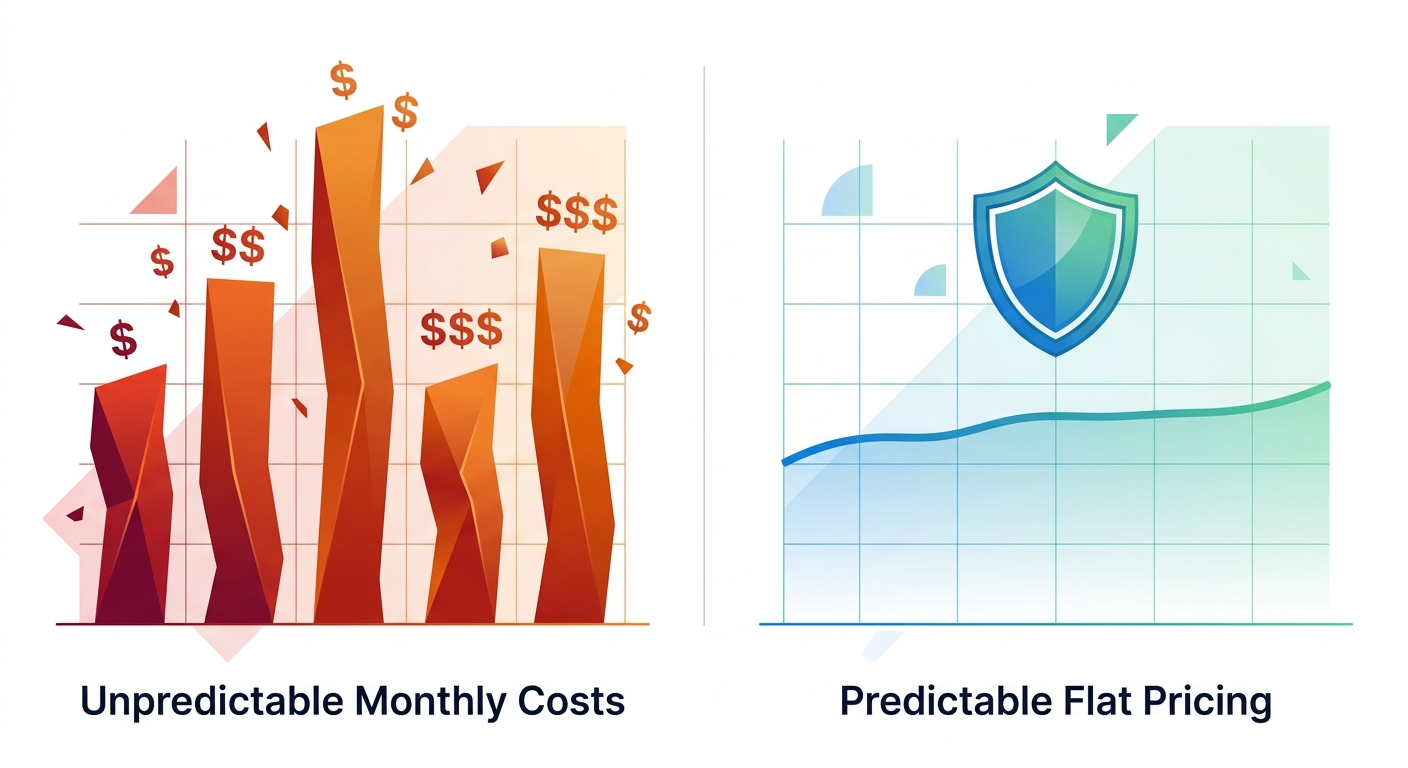
Synthflow's published pricing looks reasonable at a glance — $0.09/minute for their pay-as-you-go plan, or $29/month for their Starter tier (which includes 50 minutes). But that's not your actual cost.
Synthflow uses a BYOK (Bring Your Own Keys) model. That means you're separately paying for:
- LLM provider (OpenAI GPT-4.1 mini at $0.02/min, or GPT-4.1 at $0.05/min)
- Voice engine (ElevenLabs, Deepgram, or similar — typically $0.04–$0.07/min)
- Telephony (Twilio via Synthflow at $0.02/min, or your own Twilio at no Synthflow cost)
Revenue Squared AI's pricing is simple:
| Plan | Monthly | Per Minute |
|---|---|---|
| Starter | $147/month | $0.25/min |
| Pro | $497/month | $0.20/min |
| Growth | From $997/month | Custom |
No external API accounts. No separate LLM fees. No voice engine subscriptions. Your total monthly cost is the plan fee plus your actual call minutes — and only your actual call minutes. For a business averaging 500 minutes per month, that's $272/month on Starter. On Synthflow Pro, that same volume would cost $375 in platform fees plus $140–$320 in provider fees — $515–$695 total. At higher volumes, the gap widens further.
04Setup: Under 5 Minutes vs. Days of Configuration
Synthflow's G2 reviewers consistently mention "learning curve" (59 mentions) alongside ease of use. The platform is genuinely no-code for basic agents, but getting to a production-ready AI receptionist requires:
- Creating accounts with OpenAI, ElevenLabs or Deepgram, and optionally Twilio
- Generating and managing API keys across multiple platforms
- Configuring voice engine and LLM settings inside Synthflow
- Building your agent flow in their node-based builder
- Testing call quality end-to-end before going live
Revenue Squared AI removes all of that. You type your business information in plain English, choose a voice, set your scheduling rules, and connect your calendar. The AI answers calls immediately. No external accounts. No API key management. No prompt engineering. The 5-minute setup process is exactly what it sounds like.
05Self-Improving AI vs. Static Agents
The most important difference between these two platforms isn't pricing or setup — it's what happens after launch.
Synthflow builds you an AI phone agent. That agent will answer calls according to the configuration you set at launch. If it underperforms, you go back into the platform and edit the flow yourself. There's no automated feedback loop. The agent doesn't learn from its conversations. You manage it.
Revenue Squared AI includes the AI Sales Manager, which automatically analyzes call outcomes and adjusts your agent's behavior to improve lead conversion over time. If the AI is handling a particular objection poorly, the Sales Manager identifies it and updates the response. If callers are dropping off at a specific point in the conversation, the Sales Manager catches it.
The result is an AI receptionist that gets better every week without you doing anything. For a small business owner managing everything else in the business, this is a meaningful operational difference. See the full breakdown in our post on voice AI that learns from every call.

06White-Label: Synthflow's Strongest Suit (That Most SMBs Don't Need)
Synthflow's standout feature is white-label support — custom domains, custom branding, subaccount management, and Stripe rebilling. This is genuinely excellent if you're an agency selling AI phone agents to multiple clients under your own brand.
It's completely irrelevant if you're a landscaping company, a dental practice, or an HVAC contractor. You don't need your AI receptionist to be white-labeled. You need it to answer calls, book appointments, and help you capture every lead.
Revenue Squared AI is designed entirely around what small businesses need: appointment scheduling, lead qualification, CRM integrations, and 24/7 call coverage with no management overhead. We're not building for the agency resale market — we're building for the business that runs on inbound calls.
07Voice Quality: Both Strong, Different Approach
Synthflow's voice quality — when properly configured with ElevenLabs Turbo v2 or similar — is excellent. This is one of the things Synthflow does well and G2 reviewers consistently praise. But "when properly configured" is doing a lot of work in that sentence. Getting best-in-class voice quality out of Synthflow requires knowing which LLM and voice engine combination works best, and paying the external provider fees to run it.
Revenue Squared AI includes access to 1,000+ voices, voice cloning on Pro and Growth plans, and delivers natural conversation quality without requiring you to configure any of the underlying infrastructure. You pick a voice that fits your business, and it works. Learn more about voice cloning for business.
08Support After Day 30
Synthflow provides Slack channel access during your first 30 days of onboarding. After that, you move to ticket-based support. G2 reviewers note that response times on tickets can be slow, and some report that calls and workflows behave unpredictably without a fast path to resolution.
Revenue Squared AI includes Karina AI support on every plan, with direct support access on Pro and Growth. If something isn't working the way it should, you have a real escalation path.
09Who Should Choose Synthflow
Synthflow is the right platform for you if:
- You're an agency deploying AI phone agents for multiple clients under your own brand
- You have a technical team that can manage LLM APIs, voice engine configurations, and telephony integrations
- You need granular control over every aspect of the AI's behavior and underlying infrastructure
- White-label and subaccount management are core to your business model
10Who Should Choose Revenue Squared AI
Revenue Squared AI is the right platform for you if:
- You own or operate a small business that runs on inbound calls
- You want AI-powered call answering live in under 5 minutes
- You need predictable monthly pricing without hidden provider fees
- You want your AI receptionist to improve automatically without manual management
- You need real CRM integrations, appointment booking, and lead qualification out of the box
11Bottom Line
Synthflow is a serious platform for a specific audience — agencies and developer teams building at scale. For that use case, it has genuine strengths in white-label infrastructure and configuration flexibility.
For small business owners, it's the wrong tool. The per-minute billing with hidden provider costs, the multi-platform setup complexity, and the lack of automated improvement mean you're paying more, spending more time on maintenance, and getting a static agent instead of one that learns.
Revenue Squared AI was built for business owners, not builders. If you want every call answered, every lead captured, and an AI that improves over time — start your free trial today.
For more on how AI phone agents compare across the board, see our guide to the best AI answering service for small business.
12Frequently Asked Questions
Is Synthflow good for small businesses?
Synthflow can work for small businesses, but it's designed primarily for agencies and technical teams. The BYOK model (bringing your own API keys for LLM, voice engine, and telephony) adds setup complexity and hidden costs that make it a poor fit for most small business owners. If you're not comfortable managing API accounts across multiple providers, the real monthly cost will be higher than expected and the setup will take significantly longer than alternatives built specifically for SMBs.
What does Synthflow actually cost per month for a small business?
Synthflow's published rates start at $0.09/min on their pay-as-you-go plan, but that doesn't include LLM costs ($0.02–$0.05/min), voice engine costs ($0.04–$0.07/min), or telephony ($0.02/min via Synthflow Twilio). At moderate usage (500 minutes/month), total costs typically run $300–$700/month depending on your configuration. Revenue Squared AI is $147/month + $0.25/min with no external provider accounts required.
Does Synthflow have an AI that improves automatically?
No. Synthflow builds your agent based on your initial configuration. If it underperforms, you adjust it manually. Revenue Squared AI's AI Sales Manager automatically analyzes call outcomes and updates your agent to improve lead conversion over time — no manual intervention required.
Can I set up an AI receptionist without coding on Synthflow?
Synthflow is marketed as no-code, and the core agent builder does use a visual drag-and-drop interface. However, getting to a production-ready setup requires managing API keys from multiple external providers (OpenAI, ElevenLabs or Deepgram, and optionally Twilio), which requires technical comfort if not coding per se. Revenue Squared AI requires zero external accounts — you enter your business details in plain English and go live in under 5 minutes.
How does Revenue Squared AI pricing compare to Synthflow for a business taking 300 calls per month?
At 300 calls averaging 3 minutes each (900 minutes), Synthflow's real cost on their Pro plan would be approximately $375 platform + $126–$288 in provider fees = $501–$663/month. Revenue Squared AI on the Starter plan would be $147 + $225 (900 min × $0.25) = $372/month. The more calls you take, the wider that gap grows. See the full cost comparison of AI receptionists for more detail.
The 2026 Google LSA Playbook
Dominate your local competition, rank #1 on Google Local Services Ads, and turn Google into your top salesperson. Built for small business owners.
Get It Free
Try RevSquared free for 7 days.
Set up your agent in under 5 minutes. Live on your existing number. No contract.