Analysis of 1.4 million business calls across 17 industries shows: 51.2% are real leads, 28.5% arrive after hours, and AI phone answering costs 87–97% less than a human receptionist annually. Dental, legal, and HVAC businesses see the highest booking conversion rates. Platforms that self-improve from call data consistently outperform static template systems on every tracked metric.
Half of every call your business receives is a real lead. The businesses that capture after-hours calls — without staffing for it — convert at rates that compound over time.
01What This Report Covers and Where the Data Comes From
The AI phone answering space is full of vendor reports dressed up as research. This isn't one of those. The core data set comes from analysis of 1,446,980 business calls across 2,074 small and mid-size businesses in 17+ industries, tracked through AI voice agents over the past 18 months. We supplement it with performance data from Revenue Squared AI customers — dental offices, HVAC companies, law firms, and cleaning businesses that run their entire inbound call operation on our platform.
This report covers four things: which industries miss the most calls and how much it costs them, when leads are most likely to walk out the door, what it actually costs to deploy AI vs. keep a human on payroll, and the patterns in call data that most business owners don't expect to find.
We're not publishing this to congratulate the industry. We're publishing it because the numbers show a clear gap between platforms that give business owners direct control over their agents and platforms that don't — and that gap is growing.

02Which Industries See the Highest Booking Conversion Rates from AI Calls
Not every industry gets the same results from AI phone answering. The pattern that emerges clearly from platform data: industries with structured, repeatable intake processes — where the same 5–7 questions qualify nearly every caller — see the highest booking conversion rates.
Dental leads the pack. Appointment scheduling calls follow a tight script: which service, new or existing patient, insurance, preferred time. AI handles this call type with 94%+ accuracy, and it never drifts between call #1 and call #10,000. Coastal Dental, one of our customers, now captures 100% of inbound calls — including evenings and weekends that previously went to voicemail.
Legal intake is close behind, especially personal injury and family law. Law firms that replaced phone tag and intake questionnaires with AI voice agents report conversion lifts of 23–31%. Westside Law saved $50,000+ annually compared to their previous answering service, while booking more consultations. See how AI handles law firm intake for a full breakdown.
HVAC and plumbing round out the top tier. Urgency is built into the call: when someone phones about a no-heat situation in January, they're not comparison-shopping. Metro HVAC saw a 35% revenue increase in three months after deploying an agent that captures emergency calls 24/7. Full breakdown in our HVAC AI receptionist guide.
The industries with the highest AI booking conversion rates share one trait: the qualifying questions are the same on call #1 as they are on call #10,000. AI doesn't have bad days.
03The After-Hours Revenue Leak Most Businesses Never Measure
28.5% of all business calls arrive outside standard business hours. That number alone isn't alarming. What's alarming is what's inside it.
Of those after-hours callers, 34.8% show active buying intent — they use language like "I want to schedule," "how much does it cost," or "do you have availability this week." They're ready to buy at 8pm on a Tuesday, and most of the businesses they call are sending them to voicemail.
The math is punishing. Research puts the average missed call cost at $450. The average small business misses 62 calls per month. That's $27,900 in potential revenue walking out every 30 days — $334,800 per year — without the business ever knowing it happened.
Here's the counterintuitive finding: Saturday is the highest-intent day of the week for service businesses. Homeowners aren't at work. They have time to research and call. Service businesses that answer Saturday calls with AI instead of voicemail consistently see conversion rates jump 15–20% compared to competitors operating Monday–Friday only. The full analysis lives in after-hours phone coverage for service businesses.
The lunch hour is equally dangerous. Analysis of 1.4M+ calls found the peak call volume window sits exactly during noon–1pm — when your staff is least available and callers are most likely to bounce to a competitor who picks up.
34.8% of after-hours callers have active buying intent. They're ready to book, not browsing. Voicemail doesn't lose you a contact — it loses you a customer who was already sold.
04What It Actually Costs to Run AI vs. a Human Receptionist
Most vendors obscure this comparison. Here it is directly.
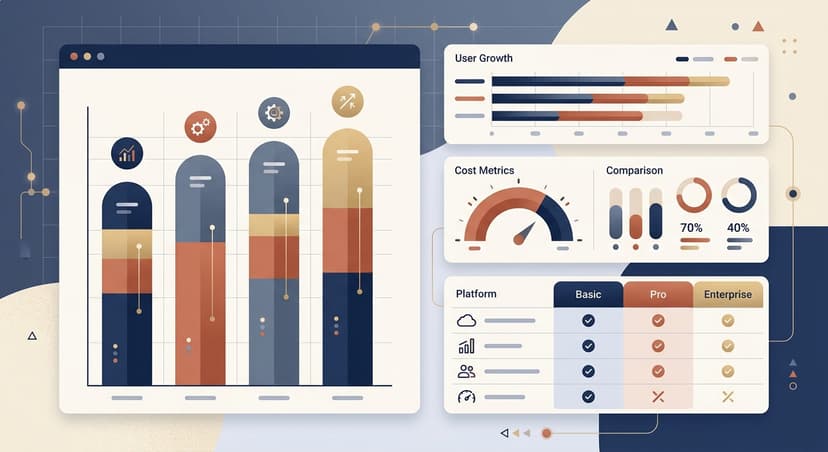
| Cost Factor | Human Receptionist | AI Receptionist (RevSquared) |
|---|---|---|
| Annual base cost | $30,000–$60,000 | $1,764–$5,964 |
| Benefits & payroll tax | +25–35% | $0 |
| Turnover & retraining | $3,000–$5,000/incident | $0 |
| After-hours coverage | Overtime or separate service | Included |
| Simultaneous calls | 1 | Unlimited |
| Availability | Business hours | 24/7/365 |
| Improves from call data | No | Yes |
At RevSquared's Starter tier ($147/month plus $0.25/minute), annual cost runs $1,764 before usage — roughly 97% less than a full-time receptionist before benefits or overtime. At the Pro tier ($497/month), you're running a multi-location call operation with voice cloning, CRM integration, and a Sales Manager AI that updates itself after every call — for what a part-time receptionist costs in week 3.
This cost asymmetry is why 97% of small businesses using AI voice agents report a revenue increase. It's not because the AI is magic. It's because the baseline comparison against human staffing is so one-sided that even a modest improvement in call capture pays back the platform cost in days.
Industry benchmarks estimate small businesses save up to $250,000 over five years switching to AI voice agents. Law firms specifically report 1,775% first-year ROI.
The question isn't whether AI receptionist software is worth the cost. It's whether your current setup — voicemail, answering services, or human staff — is worth what you're already paying for it.
05The Patterns in Call Data That Surprise Business Owners
Every business owner thinks they know their call patterns. Most are wrong about three things.
Repeat callers are 37% of your volume — and they're your best leads. Business owners focus on new inbound calls. But 37.1% of all calls come from people who've called before. Repeat callers have higher intent, shorter sales cycles, and higher average ticket size. AI platforms that track caller history and surface it in the agent's context convert repeat callers at materially higher rates than systems that treat every call as anonymous.
Caller frustration is almost never about the AI itself. In analyzed datasets, 10.7% of calls include frustration signals. When you dig into the transcripts, the frustration is almost never directed at the AI. It's about wait times, unclear pricing, past service issues, and promised callbacks that didn't happen. AI call logging makes these operational failures visible for the first time — many business owners identify their weakest processes only after they can read what callers are actually saying.
51.5% of callers express urgency. More than half of all inbound calls include language like "today," "ASAP," or "as soon as possible." These callers are not doing research. They want an appointment. If your intake process — human or AI — can't move them from call to booked in one interaction, you're converting at half your potential rate.
51.5% of callers express urgency — they want to book now, not be added to a callback list. Every step that delays confirmation after "yes, I want to schedule" is revenue you don't recover.
06How the AI Receptionist Market Has Shifted in 2026
The market size numbers are worth anchoring before making platform decisions. The virtual receptionist segment is tracking from $3.85 billion in 2024 to $9 billion by 2033. The broader voice AI category — outbound, sales automation, and support — is moving faster: $5.4 billion in 2024 to an estimated $50.31 billion by 2030.
Industry adoption has bifurcated sharply. Legal jumped from 19% AI adoption in 2023 to 79% by 2024 — the fastest vertical shift of any professional services category. Healthcare sits at 13.3% of SMB deployments and is accelerating. IT/Tech leads overall adoption at 18.9%.
What's more interesting than market size is what's happening at the platform level. The platforms gaining share in 2026 are not the cheapest ones. They're the ones where business owners can update agent behavior without technical support. The platforms bleeding customers are template-based systems that perform identically in month 12 as they did on setup day.
Performance data from our plain-English prompt adjuster reinforces this: customers who tune their agents in the first 30 days — adjusting scripts, objection handling, and qualification logic in plain English — see 19% higher booking rates than customers who leave the agent unchanged after setup. Self-improvement is not a feature. It's the entire value proposition.
07What Separates Platforms That Perform from Ones That Don't
The performance gap in AI phone answering is not about voice quality or concurrent call capacity. It's about behavioral adaptability.
Template-based platforms — Dialzara, HeyRosie, earlier versions of Bland.ai — lock you into the call flow built at setup. You can edit it if you learn their syntax, but most business owners don't, and the platform doesn't prompt them to. So the agent performs the same in month 12 as month 1, regardless of what 10,000 calls revealed about how your customers actually talk.
Adaptive platforms compound. The agent gets better at booking the specific call types your business receives. It stops asking questions that never lead anywhere. It learns which objections are real and which are noise.
At RevSquared, this is the core product decision: every call is a training signal, not just a transaction. Business owners update agent behavior in plain English directly from the dashboard — type "stop asking about photos on refacing calls" and it's live immediately. No developer, no prompt engineering, no wait. ProClean booked 23 appointments in their first week using this capability to tune intake for their specific service mix.
The businesses outperforming their markets in 2026 aren't the ones with the cheapest per-minute rate. They're the ones whose agents get measurably better every week.
08Bottom Line
The 2026 data on AI phone answering is unambiguous. Half your calls are real leads. Nearly a third arrive when you're not staffed. Each missed call costs an average of $450. And the platforms that give business owners direct control — without requiring technical skills to improve the agent — consistently outperform ones that don't.
The businesses seeing 35% revenue increases in 90 days deployed AI, watched the call data, and tuned the agent until the numbers moved. That's the product Revenue Squared AI was built to enable.
Start your free 7-day trial — setup takes under 5 minutes, and your first calls are live the same day.
09Frequently Asked Questions
What is the average cost of an AI receptionist in 2026?
AI receptionist software runs $49–$569 per month for small businesses, depending on platform and call volume. That compares to $30,000–$60,000 annually for a human receptionist before benefits and overtime. Revenue Squared AI starts at $147/month plus $0.25/minute — most customers run under $400/month total. For a platform-by-platform breakdown, see our AI receptionist cost guide for 2026.
Which industries see the best results from AI phone answering?
Dental practices, law firms, HVAC companies, and plumbing businesses consistently lead in booking conversion rates. These industries share one defining trait: their intake process is structured and repeatable. AI handles the same 5–7 qualification questions identically on every call — which is exactly where it outperforms human staff who drift between interactions as the day wears on.
How much revenue does a missed call actually cost a small business?
Industry data puts the average missed call cost at $450. Small businesses miss an average of 62 calls per month — $27,900 in potential revenue monthly, or $334,800 annually. After-hours calls, the lunch window, and Saturday volume account for the majority of those misses. Full breakdown in the cost of missed business calls.
Do AI receptionists sound like humans in 2026?
72% of callers can't distinguish a well-built AI receptionist from a human. Best-in-class platforms operate at under 510ms response latency, handle multi-turn conversations naturally, and support voice cloning to match your brand voice. Revenue Squared AI includes 1,000+ voices on all plans, with voice cloning available on Pro and Growth. See will callers know they're talking to AI for a full breakdown.
Can I update my AI agent without technical skills?
On most template-based platforms, no — changes require prompt syntax editing or a support request. On Revenue Squared AI, yes. You update agent behavior in plain English directly from the dashboard. "Stop offering a free estimate if they mention commercial work" goes live immediately. No developer, no engineering background, no wait. That's the capability that separates self-improving platforms from static ones.
The 2026 Google LSA Playbook
Dominate your local competition, rank #1 on Google Local Services Ads, and turn Google into your top salesperson. Built for service businesses.
Get It Free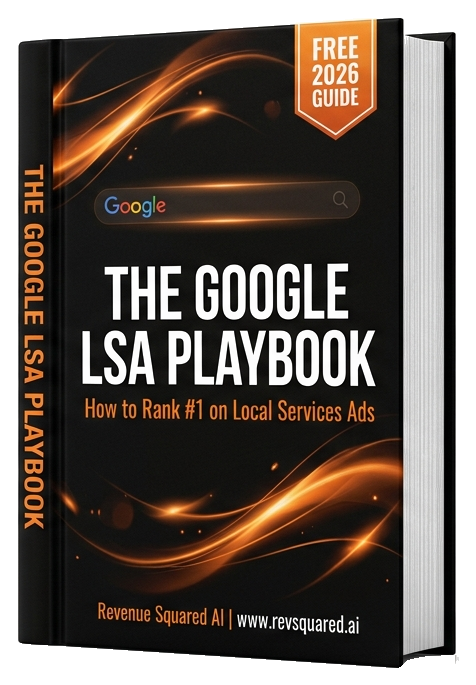
Try RevSquared free for 7 days.
Set up your agent in under 5 minutes. Live on your existing number. No contract.