If you're running Google Local Services Ads and wondering why your phone stopped ringing, your Google LSA phone response score may be the culprit. It's one of Google's most influential ranking signals — and most businesses don't know it exists until their leads dry up.
Here's the short version: Google tracks whether you answer every call from your LSA ads. Miss too many, and Google quietly stops showing your ads. No warning email. No dashboard alert. Just fewer calls.
What Is the Google LSA Phone Response Score?
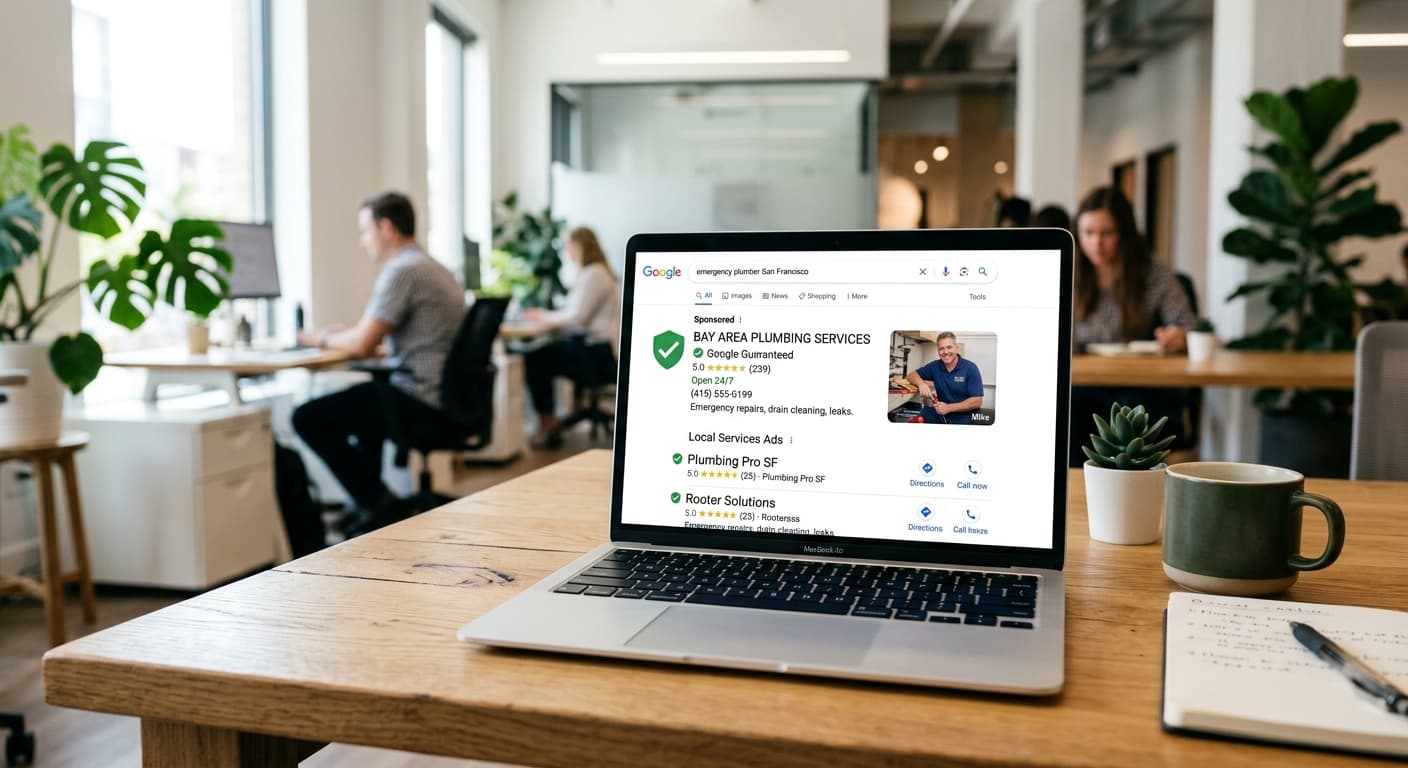
The phone response score is Google's measurement of how consistently and quickly you answer calls generated by your Local Services Ads. Google watches what happens the moment a customer taps the Call button in your LSA listing.
Answer quickly and consistently? Your score goes up, and Google rewards you with better placement. Let calls go to voicemail or ring out unanswered? Your score drops — and so does your ad visibility.
Google's official documentation confirms that "responsiveness to customer inquiries" is a direct input into your ad ranking, alongside your bid amount and profile quality. But unlike reviews or your Google Guarantee badge, responsiveness is something you can lose overnight and is directly tied to every call Google routes your way.
The top 3 LSA positions capture 70-80% of all calls in a given search. Drop out of those positions because of a poor phone response score, and you're essentially invisible.
How Google Calculates Your Phone Response Score
Google doesn't publish a precise formula, but based on their documentation and observed ranking behavior, your score is primarily driven by:
Call answer rate — The percentage of LSA-routed calls you answer live. Google records whether each call from your ad was answered, went to voicemail, or went unanswered entirely. This is tracked continuously, not as a one-time snapshot.
Response speed — How quickly you pick up after the call connects. Calls answered in the first two rings signal high responsiveness. Slow pickups still count as answered but carry less weight.
Consistency over time — Google weights your recent 90-day behavior more heavily than your historical average. A strong six-month track record doesn't protect you from a week of missed calls.
Message response time — If you've enabled message leads, Google measures your average response time there too. Slow message response times get displayed publicly in your ad ("typically responds in 2 days"), which discourages contacts before they even call.
The practical benchmark from industry data: miss more than 5% of your calls and you're creating a meaningful drag on your ranking. For a business getting 100 LSA calls per month, that's fewer than 5 unanswered calls before Google starts adjusting your placement.
What Score Is "Good" — and What Will Tank Your Rankings?
Google doesn't display your phone response score as a visible number in the dashboard. Instead, you see its effects: ad position, call volume, and cost per lead all shift based on it.
Here's how different responsiveness levels play out in practice:
| Answer Rate | Score Tier | Ranking Impact |
|---|---|---|
| 95%+ | Excellent | Top 3 positions, maximum ad exposure |
| 85-94% | Good | Competitive placement, minor visibility loss |
| 70-84% | Average | Inconsistent placement, higher CPL |
| Below 70% | Poor | Significant ranking suppression |
| Chronic misses | Critical | Ads may effectively stop showing |
Google knows your business says it's open 9-5. Google also knows the person searching for an emergency plumber at 9 PM on a Saturday doesn't care about your office hours.
The 90-Day Penalty: What Happens When Your Score Drops
Here's what makes a poor phone response score particularly damaging: the effects lag behind your behavior.
When you miss calls consistently for a week, Google doesn't immediately slash your ranking. It adjusts gradually. But the recovery works the same way — you can't turn your score around overnight. Industry data indicates that ranking penalties from responsiveness drops take 2-4 weeks to recover, even after you fix the underlying problem.
This means:
- Missing calls during a busy season costs you leads for weeks after the season ends
- A family emergency or vacation week with missed calls creates a ranking hole that persists into the next month
- Payment lapse (which stops your ads temporarily) resets your momentum — see our notes on why missed calls compound quickly
After-Hours Calls: The Hidden Score Killer
This is where most businesses unknowingly destroy their LSA performance.
Across all industries, 62% of calls to small businesses go unanswered. For home service contractors specifically, one analysis found that businesses answered only 25.9% of their inbound calls — meaning nearly 3 out of 4 calls went to voicemail or rang out.
The painful reality: LSA leads don't respect business hours. Emergency HVAC calls happen at 11 PM. Roof leak calls come in Saturday morning after a storm. A homeowner searching for a plumber at 7 AM calls whoever answers.
And Google is watching every single one of those calls — including the ones you missed at 11 PM on a Tuesday.
Your after-hours coverage gap isn't just a customer service problem. It's actively suppressing your ad visibility every time the phone rings at night or on weekends.
The average small business loses approximately $126,000 per year to missed calls. For businesses running LSAs, that number is compounded by the ranking penalty — you're not just losing that one lead, you're reducing how many leads Google sends you going forward.
How to Keep Your Phone Response Score Maxed Out
There are three realistic approaches to maintaining a near-perfect phone response score:
Option 1: In-house staff coverage Hire someone to answer every call, including nights and weekends. Cost: $35,000-$60,000/year for a full-time receptionist, plus benefits. Coverage: unreliable — humans get sick, take vacations, and miss calls during busy periods. This is how most top-performing businesses operated before 2024.
Option 2: Live answering service Outsource call answering to a third-party service. Cost: $200-$500/month, plus per-call fees that add up fast. Coverage: better than nothing, but quality varies and they don't know your business the way you do. Callers often notice they've reached an outsourced service.
Option 3: AI phone agent An AI answers every call instantly, 24/7, with no missed calls and no per-call fatigue. Cost: $147-$497/month. Coverage: 100%. The AI knows your business, your services, your availability, and your scheduling rules. It books appointments, qualifies leads, and handles after-hours calls with the same quality as business-hours calls.
For businesses spending $1,000-$5,000/month on LSA ads, protecting their phone response score with a $147/month AI phone agent is the clearest ROI calculation in marketing. For a deep dive on the math, see our voice AI ROI analysis for small businesses.
How AI Phone Agents Solve This Permanently
Revenue Squared AI's AI receptionist was built specifically to solve the phone responsiveness problem for small businesses running local advertising.
When a call comes in from your Google LSA ad, the AI answers on the first ring — every time. It qualifies the lead, collects their information, and books an appointment directly in your calendar. For emergency calls, it can escalate based on your rules (type of issue, time of day, urgency signals in the conversation).
The results are consistent because the system is consistent. No sick days. No vacation weeks. No Monday morning call log full of missed leads from the weekend.
Contractors using AI phone answering for their LSA traffic report:
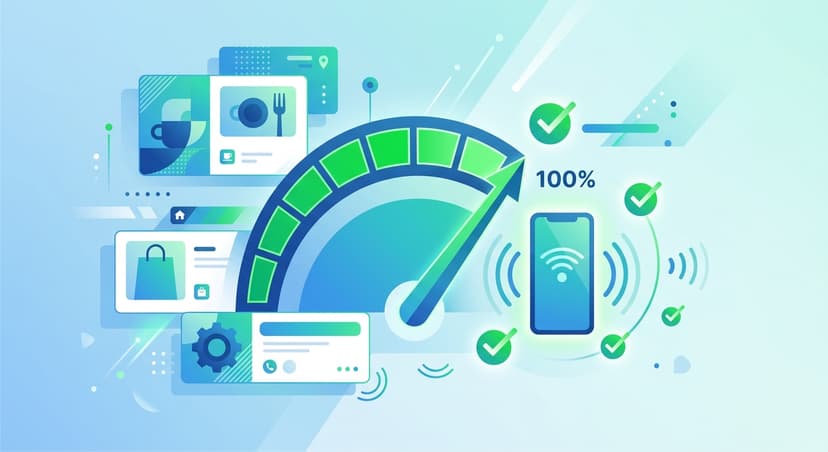
- Answer rates approaching 100% — every LSA call answered, regardless of time
- 31% booking rate on answered calls within the first hour, versus 15% when response time exceeds 24 hours
- Sustained top-3 LSA ranking because Google's responsiveness signal stays permanently high
- Lower effective CPL because the same ad spend generates more answered calls and more booked jobs
You can see how this integrates with the broader strategy for ranking higher on Google LSAs — responsiveness is the multiplier on everything else you do.
Protect Your Ad Investment
If you're paying $25-$80 per LSA lead, a poor phone response score is one of the most expensive mistakes you can make. You're not just losing the lead — you're paying to damage your ranking.
The fix is straightforward: set up an AI phone agent that answers every call from your LSA ads immediately, 24 hours a day. Your phone response score stays maxed out, your ranking stays competitive, and your cost per booked job drops because more answered calls turn into booked appointments.
The true cost of missed calls goes beyond the immediate lost lead. For LSA advertisers, it's a compounding tax on every dollar you spend.
Frequently Asked Questions
What exactly is the Google LSA phone response score?
It's Google's internal measurement of how consistently and quickly you answer calls generated by your Local Services Ads. Google tracks whether every LSA-routed call is answered live, went to voicemail, or went unanswered. Your score directly influences your ad ranking — a poor score means your ads show up less often, even if your bid is competitive and your reviews are strong.
How does Google know if I answered my LSA call?
Google routes LSA calls through a tracking number, which lets them monitor the outcome of every call. They can detect whether the call was answered live, went to voicemail, or wasn't picked up. This tracking happens for every call, 24 hours a day — not just during business hours.
What is a good phone response rate for LSA?
Industry data suggests that missing more than 5% of your calls creates a meaningful drag on your ranking. Top-performing businesses in highly competitive markets aim for 95%+ answer rates. Practically speaking, this requires 24/7 coverage — either through a live answering service or an AI phone agent — because a meaningful share of LSA calls come in outside business hours.
How long does it take to recover from a poor phone response score?
Recovery typically takes 2-4 weeks of consistently answering calls, even after you've addressed the underlying problem. Google weights your most recent 90 days of behavior most heavily, so a week of missed calls can take several weeks of perfect responsiveness to overcome. This lag is why proactive, consistent coverage matters more than reactive fixes.
Can an AI phone agent actually improve my LSA ranking?
Yes. An AI phone agent answers every call immediately, 24/7, which keeps your phone response score at or near 100%. Because your responsiveness signal stays high, Google continues prioritizing your ads in competitive positions. Businesses using AI phone answering for LSA traffic report sustained top-3 rankings that previously required constant manual attention to maintain. Start a free trial to see how it works for your business.