AI lead reactivation uses a voice AI agent to call dormant CRM contacts — leads that inquired and went cold — hold a real qualifying conversation, and book appointments automatically. On a segmented list of past inquiries, AI voice outreach achieves 15–25% reactivation rates. Email drip sequences on the same list average 6–8% open rates and rarely produce booked appointments. Revenue Squared AI can work through thousands of old contacts overnight, with the agent improving its pitch after every call.
Buying new leads costs $75–$200+ each in most service industries. Reactivating a dead lead costs fractions of a penny in AI conversation time. The CRM you have is your cheapest lead source — but only if you call, not email.
The average service business CRM holds between 1,000 and 10,000 dormant contacts. Roofing companies that ran a season and stopped following up. HVAC companies that lost a lead to voicemail 8 months ago. Dental practices with patients who booked a consult and went quiet. Every one of those contacts represents a purchase decision that was made — and then unmade — for reasons that usually have nothing to do with your product.
Most leads go cold because of timing, not because they decided against you. A project got deprioritized. A budget issue came up. Someone meant to call back and forgot. Industry analysis consistently shows 30–40% of CRM contacts go cold before a business ever follows up more than twice. That number is close to half your paid lead spend, sitting unused in a database nobody touches.
01Why Dead Leads Aren't Actually Dead
The most expensive myth in small business sales is that a cold lead is a lost lead. It isn't. It's a lead you paid for once that nobody called back enough times.
Most sales require 5 or more contact attempts, but most businesses give up after one or two. The leads in your CRM from last year are not failures — they are unfinished business. And voice outreach holds its conversion power across much longer time windows than email, because a phone call forces a real response. Email gets ignored indefinitely. A call gets answered or it doesn't — and when it does, a real conversation happens.
| Lead Age | Cold Email Open Rate | AI Voice Pickup Rate | Reactivation Rate |
|---|---|---|---|
| 0–30 days | 22% | 28–35% | 30–45% |
| 31–90 days | 14% | 22–28% | 18–28% |
| 91–180 days | 9% | 18–24% | 12–20% |
| 6–18 months | 6% | 15–22% | 8–15% |
| 18+ months | 4% | 10–15% | 5–10% |
Even leads 18 months old pick up a voice call at 2–3× the rate they open an email. And when they pick up, they're speaking to an agent that knows who they are and why they originally reached out — not a generic subject line about "staying in touch."
Dead leads are not lost business. They are business you already paid for that nobody finished closing. An AI agent can work through 2,000 contacts in a single overnight session — your sales team physically cannot.
02Email Drip Sequences Don't Revive Dead Leads
A cold email from a business you vaguely contacted 9 months ago achieves two things: a 6% open rate and a quiet unsubscribe.
Email nurture sequences are built for warm prospects — people still engaged in a recent sales conversation, still actively comparing options. They fail at reactivation because they can't hold a conversation, can't handle new objections, and can't capture updated intent. You're sending the same template to contacts who went cold for 100 different reasons, and the template accounts for none of them. The CAN-SPAM Act also limits how much follow-up email a business can push before engagement rates crater and domain reputation suffers.
An AI voice call does the opposite. The agent calls, identifies itself, and asks a specific question tied to the original inquiry: "Hi, this is Alex with Metro HVAC — you reached out last spring about an AC replacement. Just checking in to see if that's still something you're working on." That sentence alone generates more honest responses than any drip sequence.
When the contact picks up — and 15–22% of a segmented cold list does — the agent holds a real conversation. It handles "we went with someone else" (logs it, removes them). It handles "still interested but not ready" (logs a follow-up date). When someone says yes, it books the appointment in real time.
An AI voice call is not a fancier way to send a follow-up email. It forces a real conversation — which means you learn exactly what happened to every dead lead, not just which percentage opened a subject line.
03How AI Voice Reactivation Actually Works
The mechanics are simpler than most businesses expect:
1. Export your cold list. Pull a CSV from your CRM with name, phone, and original inquiry type. A list of 500–2,000 contacts from the past 6–18 months is the ideal starting point. 2. Build your agent in plain English. RevSquared doesn't require prompt engineering. You type what the agent should do: "Call people who asked about roof replacement quotes. Tell them we have crew availability this month. Offer a free re-inspection. Book them into my Google Calendar." 3. Set calling hours and launch. The agent runs the list during the window you define — typically 9am to 7pm in the prospect's time zone — with no manual dialing and no rep involvement. 4. Bookings land in your calendar. When a contact says yes, the agent books directly into Google Calendar, Calendly, or your CRM. The lead gets a confirmation. You get the appointment. 5. The agent improves from every call. RevSquared's AI Sales Manager analyzes outcomes after every campaign — which openers got responses, which objections caused drop-offs, which time slots converted best. You update the agent by typing a sentence. The next campaign outperforms the last.
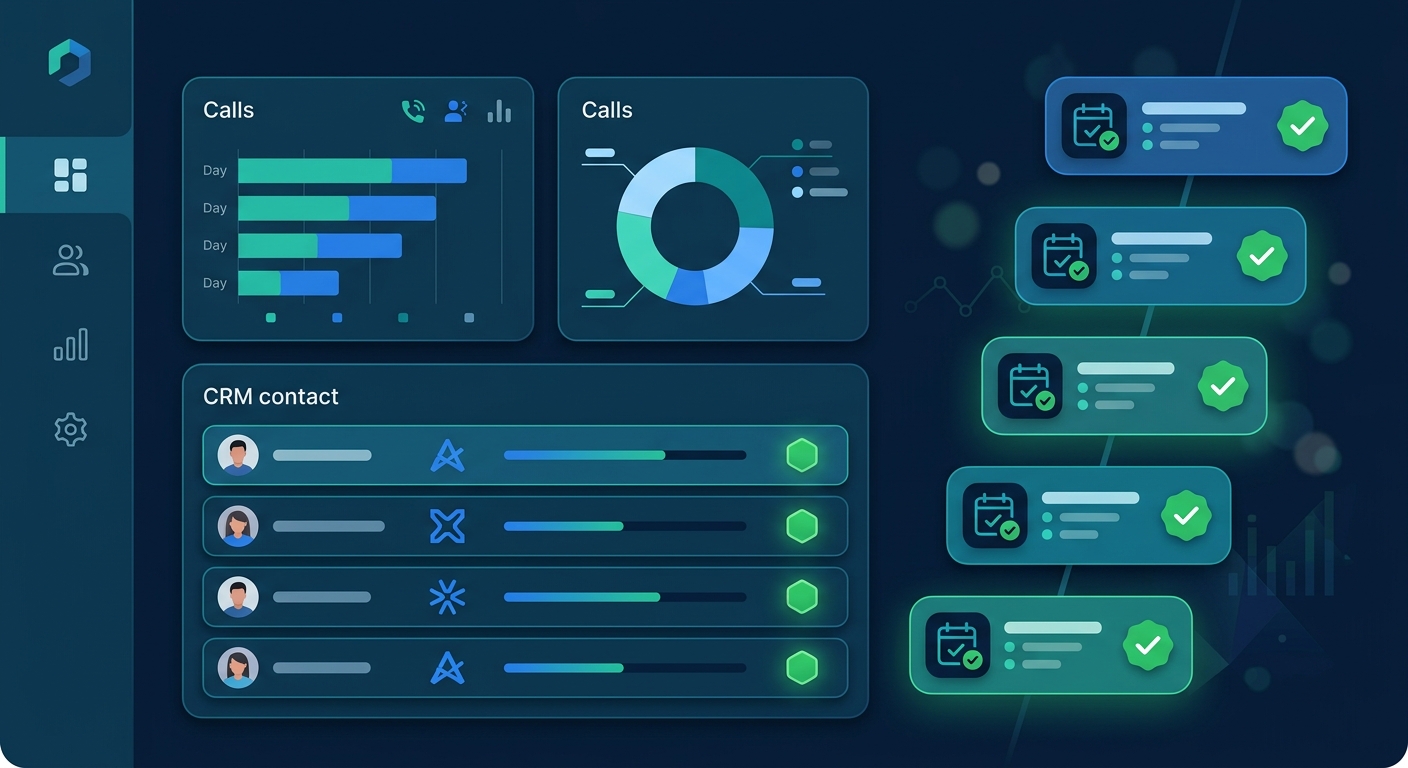
That last step — the self-improvement loop — is what separates RevSquared from platforms that hand you a script editor and wish you luck. You don't hire a prompt engineer to fix underperforming calls. You type "leads are saying the quote is too high — offer the maintenance plan instead" and it updates. Immediately. No dev ticket, no waiting, no guessing.
04The Right Lead Age to Reactivate
The conventional rule is to not bother with leads older than 90 days. That rule is based on human follow-up, where calling through 5,000 contacts manually costs hundreds of hours of rep time.
AI eliminates the labor cost of outreach. When one more call costs $0.75, the economics of older leads completely change.
The 3–12 month bucket is where most businesses find the best ROI. Enough time has passed that the lead's situation has likely shifted — the budget issue resolved, the project got approved, the competitor they chose didn't deliver. A call in that window doesn't feel like harassment. It feels like good timing.
Leads aged 18 months or older convert at lower rates (5–10%), but the math still holds when the ticket size is large. A roofing company paying $100 per new lead from Google Ads can spend $0.75 to call a 2-year-old lead with zero incremental risk. Even at a 5% reactivation rate on 500 contacts, that's 25 booked estimates for $375 total. One job closed pays for 133 more campaigns.
An AI agent doesn't care how old the lead is. It calls with the same energy at contact 1,847 as it did at contact 1. No sales rep has ever managed that.
05Which Industries Get the Best Results
Reactivation performs best when the original inquiry required real intent — a form fill, a quote request, an inbound call. The higher the original intent, the better the reactivation rate, even on older lists.
| Industry | Why It Works | Best Lead Age Range |
|---|---|---|
| Roofing | High ticket, seasonal delays, multi-quote drop-offs | 2–18 months |
| HVAC | Equipment failures recur — spring leads convert in fall | 1–12 months |
| Dental | Patients intend to book, forget, respond to personal outreach | 3–24 months |
| Law firms | Case timelines shift — "not ready" becomes urgent fast | 1–6 months |
| Auto dealerships | Trade-in value, rates, and inventory all change quarterly | 3–12 months |
| Home services | Seasonal project cycles, post-holiday budget resets | 2–8 months |
Auto dealerships in particular see high list turnover — a shopper comparing three vehicles in February has completely different circumstances by June. A 10,000-contact CRM reactivated quarterly keeps those leads working instead of aging out.
The industries with the best reactivation ROI share one trait: the original inquiry required research and real intent. If a lead filled out a form or made an inbound call, they wanted what you sell. AI calling brings that conversation back to life.
06What AI Reactivation Costs vs. Buying New Leads
The math is not close.
| Lead Source | Cost Per Lead | Typical Close Rate | Cost Per Booked Appointment |
|---|---|---|---|
| Google Ads (home services) | $75–$200 | 20–30% | $250–$1,000 |
| Facebook Ads | $30–$80 | 10–20% | $150–$800 |
| AI Reactivation (RevSquared) | ~$0.75/call | 10–20% | $4–$8 |
| Human rep cold-calling | $25–$40/hr labor | 5–15% | $165–$800 |
That $4–$8 per booked appointment assumes a conservative 10–15% reactivation rate on a segmented list of real past inquiries. ProClean booked 23 appointments in their first week running AI reactivation. Metro HVAC generated a 35% revenue increase in 3 months by combining inbound AI coverage with quarterly reactivation campaigns on their existing CRM.
RevSquared's Starter plan is $147/month plus $0.25/minute. A 1,000-contact campaign with 3-minute average calls costs roughly $750 total including the monthly platform fee. At 15% reactivation, that's 150 booked appointments for $5 each. If you're in roofing or HVAC, those appointments are worth $3,000–$20,000 each in potential revenue.
Buying new leads at $75–$200 each is table stakes. Working the 3,000 contacts already in your CRM at $0.75 a call is leverage. Most businesses keep paying for the table stakes and ignore the leverage sitting in their database.
07How to Launch Your First AI Reactivation Campaign
RevSquared makes setup fast enough that you can have your first campaign running the same day:
1. Start your free 7-day trial — live in under 5 minutes, no credit card required 2. Create a new outbound agent. Choose a voice from the 1,000+ library, or clone your own voice on Pro and Growth plans 3. Describe the campaign in plain English: what did these leads originally want, what's your current offer, and what should happen when they say yes 4. Upload your contact CSV exported from your CRM 5. Set calling hours and launch — the agent handles the rest
Every call is recorded and transcribed automatically. Bookings go directly into your calendar. Opt-outs are logged and respected. After the campaign ends, the AI Sales Manager gives you a performance breakdown in plain English — and you update the agent for next time by typing a single sentence.
The most important thing you can do after the first campaign: run another one. Businesses that do quarterly AI reactivation compound their results — the agent improves, the list gets cleaner, and cost per booked appointment keeps dropping. For a complete guide to list segmentation, timing, and legal compliance, read our full reactivation campaign playbook.
08Bottom Line
Your CRM is your cheapest lead source. You already paid to acquire those contacts. Email will not bring them back — a 6% open rate on a cold list is not a reactivation strategy, it's digital noise.
AI voice reactivation calls those contacts, holds a real conversation, and books appointments at 20–50× less cost than buying new leads. The businesses that run this quarterly don't compete the same way in their local market. They compound. Every campaign uncovers revenue that was sitting dormant in a database nobody was touching.
Start your first AI reactivation campaign — the agent can be built and your list loaded in under 10 minutes.
09Frequently Asked Questions
What is AI lead reactivation?
AI lead reactivation uses a voice AI agent to automatically call dormant CRM contacts — people who inquired but never converted — hold a qualifying conversation, and book appointments without human involvement. Unlike email drip sequences, AI voice calls achieve 15–25% reactivation rates on segmented cold lists because they force a real response and personalize each conversation based on the original inquiry.
How old can a lead be and still be worth reactivating?
Most businesses see the strongest results from leads aged 3–12 months, with solid ROI extending to 18 months. Beyond 18 months, reactivation rates drop to 5–10%, but the economics remain favorable when the ticket size is large. A $0.75 call to a 2-year-old roofing lead costs nothing meaningful to send — and produces appointments worth $5,000–$20,000 when they close. If the original inquiry was high-intent, age matters less than you'd expect.
How does AI voice reactivation compare to email drip sequences?
Cold email lists typically achieve 6–8% open rates and 1–2% click-through rates. AI voice calls achieve 15–25% pickup rates and 10–20% reactivation rates on the same list. The more important difference: a voice call holds a real conversation, captures updated intent, and books the appointment in the same interaction. An email cannot do any of that.
What does AI lead reactivation cost with RevSquared?
RevSquared charges $147/month on Starter plus $0.25/minute per call. A 1,000-contact campaign with 3-minute average calls costs roughly $750 total. At a 15% reactivation rate, that's 150 booked appointments — about $5 per appointment. Compare that to $75–$200 per lead from Google Ads in home services, where a booked appointment typically costs $250–$1,000 after accounting for close rates.
Is AI outbound calling legal?
AI outbound calling is subject to TCPA regulations, which require prior express written consent for automated calls to mobile numbers. Before running any campaign, verify your original lead capture included consent language for automated calls, honor opt-out requests immediately, and restrict calling to 8am–9pm in the recipient's time zone. RevSquared's platform handles opt-out logging and calling-hour restrictions automatically — but consent verification is your responsibility. Review the FCC's guidance on robocalls and texts before your first outbound campaign.
The 2026 Google LSA Playbook
Dominate your local competition, rank #1 on Google Local Services Ads, and turn Google into your top salesperson. Built for service businesses.
Get It Free
Try RevSquared free for 7 days.
Set up your agent in under 5 minutes. Live on your existing number. No contract.