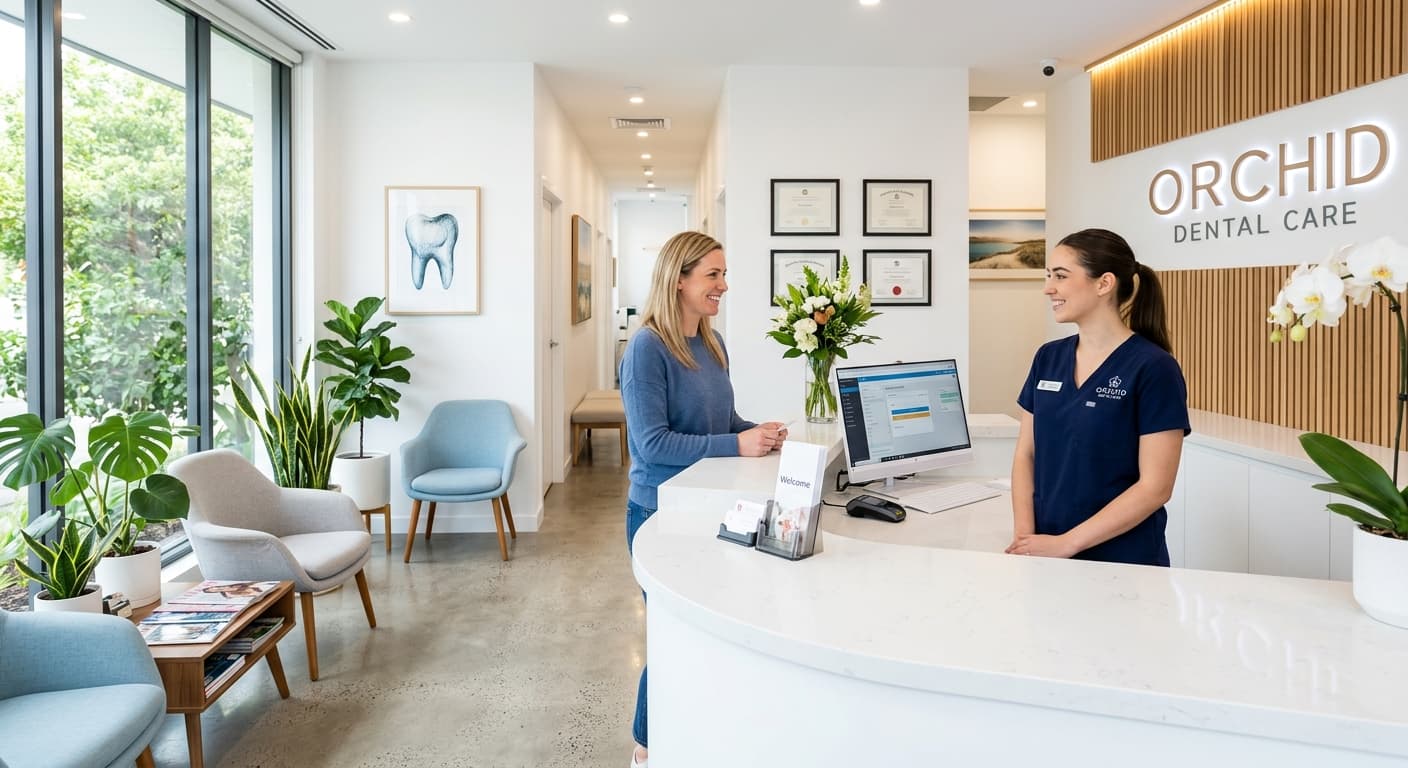
Dental offices have a unique phone problem. When your hygienists and assistants are chairside and your front desk person is checking in a patient, the phone rings. And rings. And goes to voicemail.
The patient on the other end had a toothache. They were ready to book. Now they're calling the practice down the street.
This scenario plays out hundreds of times per day across dental offices nationwide. Staff can't pause a procedure to answer the phone, and hiring a dedicated phone-only receptionist for $40,000+ per year doesn't make financial sense for most practices. That's where an AI receptionist comes in.
70% of dental calls are bookings, insurance questions, and triage — the exact repetitive work an AI handles perfectly while your team stays chairside.
01Why Dental Offices Are Perfect for AI Receptionists
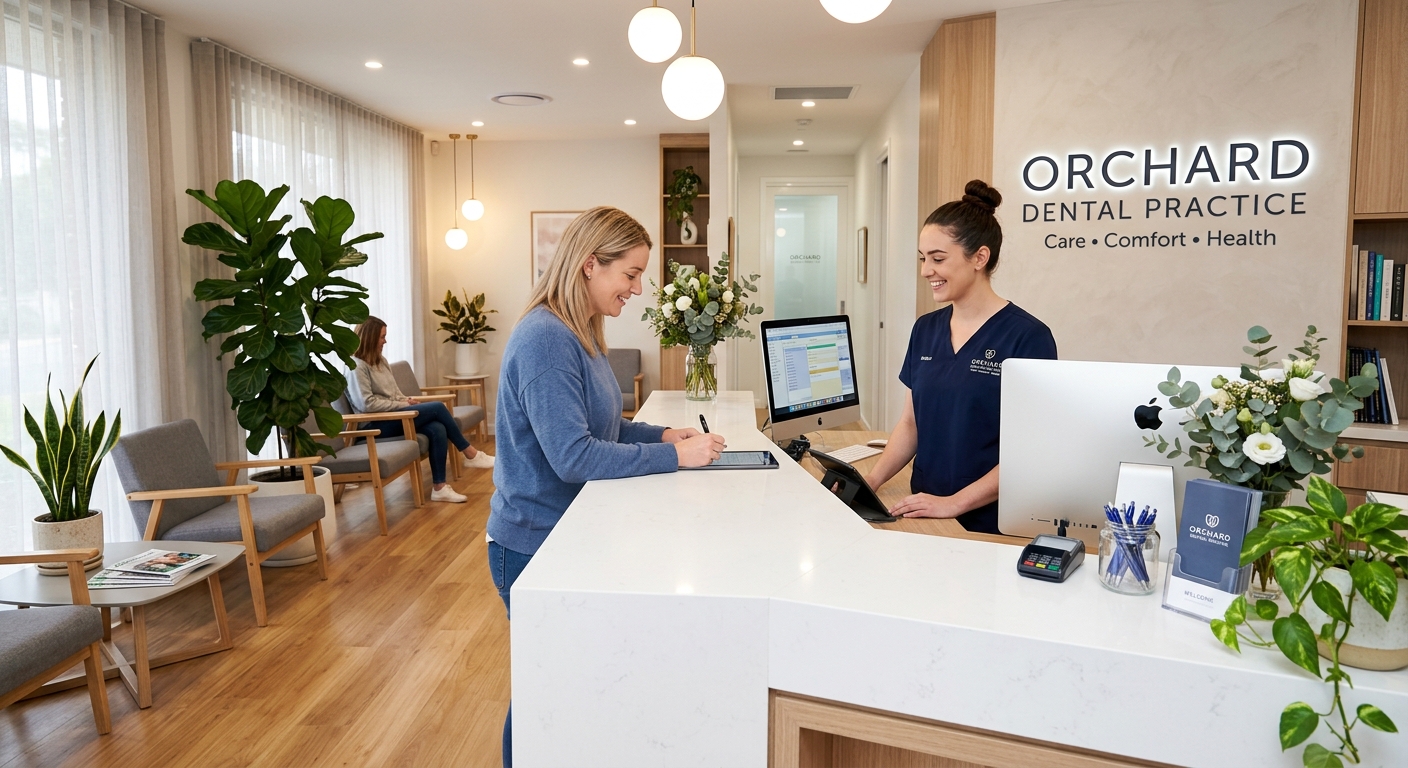
Dental calls follow predictable patterns. About 70% of inbound calls fall into a few categories: new patient appointments, recall scheduling, insurance verification questions, directions and hours, and emergency triage.
These are exactly the types of conversations an AI receptionist handles perfectly. The questions are specific, the answers are knowable, and the actions (book an appointment, route an emergency) are well-defined.
An AI receptionist trained on your dental practice can:
Book new patient appointments — The AI checks your calendar in real time and schedules directly. No callback needed, no "let me check and get back to you." The patient calls, the appointment gets booked, done.
Handle insurance questions — "Do you accept Delta Dental? What about MetLife?" The AI knows your accepted insurance providers and can answer instantly.
Triage emergencies — A patient calling with severe pain at 8 PM on a Tuesday gets routed to your emergency contact immediately. The AI recognizes urgency and acts accordingly.
Manage recall scheduling — Overdue patients get a professional, friendly conversation encouraging them to rebook their cleaning. The AI can handle outbound recall campaigns at scale.
Answer common questions — Hours, location, parking, what to bring to a first visit, pre-appointment instructions. All answered instantly without tying up staff.
Best of all, a well-configured AI receptionist learns from every patient call — optimizing its approach to booking, triage, and FAQ handling based on real conversation data from your practice.
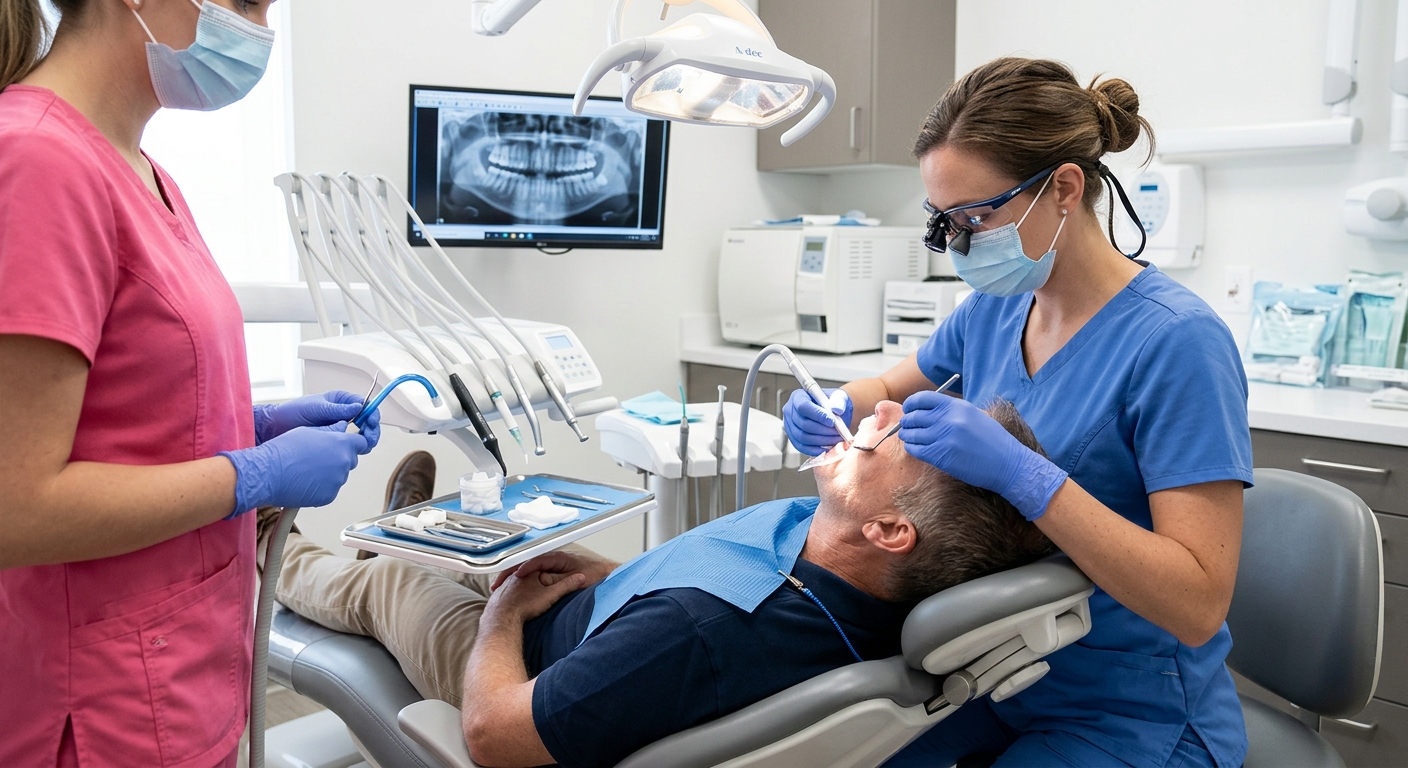
Every call your hygienist doesn't have to interrupt a cleaning to answer is billable time you just got back.
At $1,200 per new patient, you need to rescue one missed call a month to pay for the AI twelve times over.
02The Financial Impact for Dental Practices
Let's look at real numbers. The average new dental patient is worth $1,200 to $1,500 in first-year revenue (cleaning, exam, X-rays, and at least one follow-up procedure). If your practice misses 5 new patient calls per week — which is conservative for a busy practice — that's $6,000 to $7,500 in lost monthly revenue.
An AI receptionist that captures even a portion of those missed calls pays for itself many times over. At $147 per month, you need to convert one additional patient to see a 30x return.
Patients at your downtown flagship and your suburban office should get the same phone experience — a human team will never deliver that, the AI does by default.
03Real Results: Multi-Location Dental Groups
Multi-location dental practices are seeing some of the strongest results from AI receptionists. Managing phone coverage across 3, 5, or 10 locations is a staffing nightmare — each location needs front desk coverage, and the quality of phone handling varies dramatically by location.
An AI receptionist delivers identical quality across every location. Same greeting, same knowledge base, same booking process, same professionalism. Patients at your suburban location get the same phone experience as patients at your downtown flagship.
One multi-location dental group reported capturing an additional 40+ new patient appointments per month after deploying AI receptionists across their practices — appointments that were previously going to voicemail and never returning.
04Getting Started
Setting up an AI receptionist for your dental practice takes about 5 minutes on Revenue Squared AI. The platform includes dental-specific templates in the marketplace, so you can start with a proven framework and customize it with your practice's specific services, providers, insurance information, and scheduling rules.
No integration with your practice management software is required to start (though it's available for practices that want deeper automation). The AI works with your existing phone system and can be live before your next morning huddle.
Your clinical team should be focused on patient care, not apologizing for missed calls. Let the AI handle the phone.
The 2026 Google LSA Playbook
Dominate your local competition, rank #1 on Google Local Services Ads, and turn Google into your top salesperson. Built for dental practices.
Get It Free
Try RevSquared free for 7 days.
Set up your agent in under 5 minutes. Live on your existing number. No contract.