
If you run a law firm, here's a number that should keep you up at night: $109 billion. That's how much revenue the legal industry loses every year from unanswered phone calls. Not from bad marketing. Not from weak cases. From simply not picking up the phone.
According to Clio's 2024 Legal Trends Report, only 40% of law firms answer an incoming call from a prospective client — down from 56% in 2019. Of the firms that miss a call, only 20% bother to return it. Meanwhile, 85% of callers who reach voicemail never call back. They call the next attorney on Google instead.
The math is brutal. U.S. law firms receive an estimated 557 million calls per year. About 35% — nearly 195 million — go unanswered. With the average new client representing roughly $8,000 in revenue, those missed connections represent a staggering loss that no amount of marketing spend can recover.
In legal, the firm that answers first wins the case — 72% of prospects contact only one firm, and 85% of the ones who hit voicemail never call back.
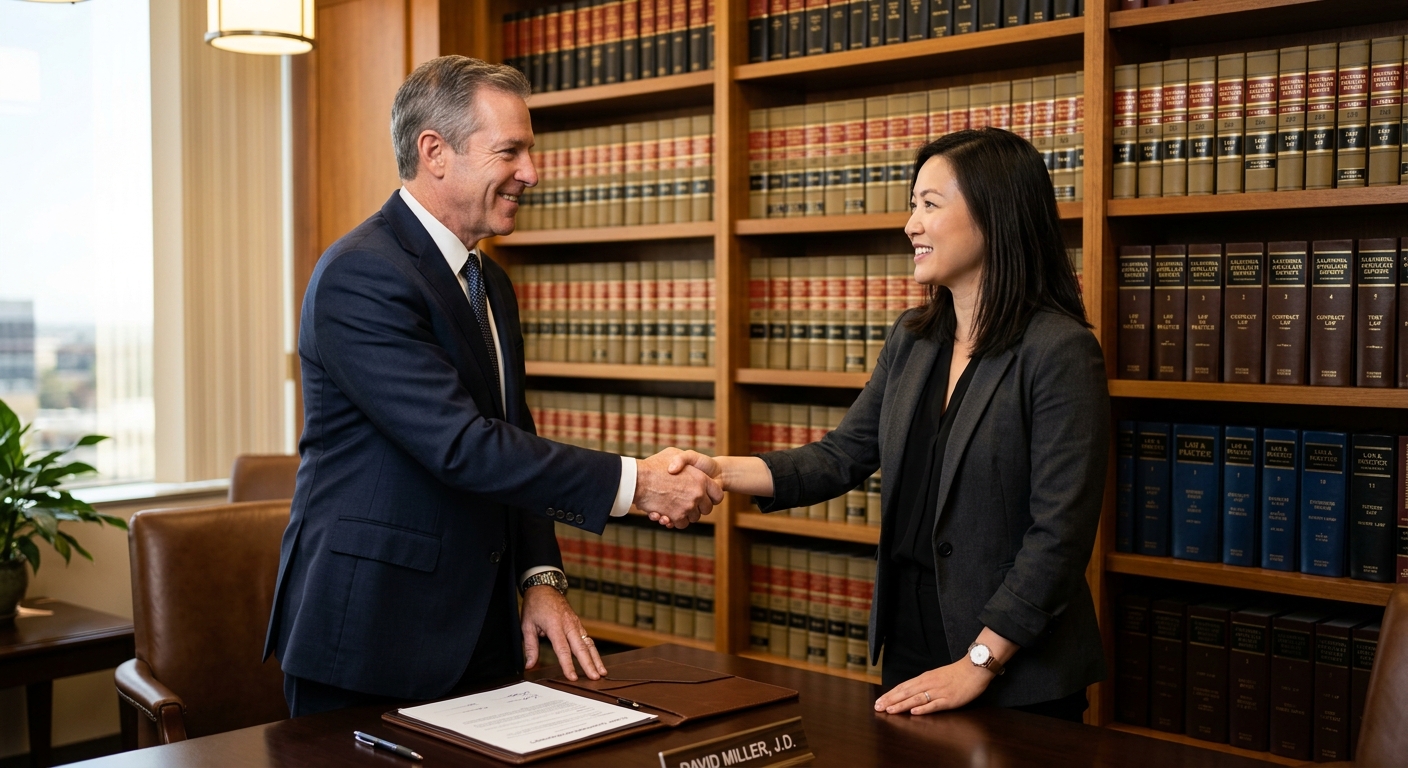
01Why Law Firms Miss So Many Calls
Most attorneys didn't go to law school to answer phones. But the reality of running a small or mid-sized firm means that phone calls are your lifeblood — and they come in at the worst possible times.
You're in court. A potential personal injury client calls while you're in a hearing. They need help now. Your phone rings four times and goes to voicemail. They hang up, Google "personal injury lawyer near me," and call your competitor.
Your front desk is overwhelmed. A solo receptionist can only handle one call at a time. During a busy Monday morning, three calls come in simultaneously. Two go to voicemail. One of those callers had a $50,000 case.
After hours are dead zones. Legal emergencies don't happen between 9 and 5. A potential client arrested on a Friday night, a business owner served with a lawsuit on Sunday — these callers need immediate help, and they'll hire whoever answers first.
The legal industry's responsiveness problem isn't just about convenience. 67% of legal clients make their hiring decision based on the speed of response. Law firms that respond within five minutes see 400% higher conversion rates compared to those that take 30 minutes or more. And yet, 39% of firms take over two hours to respond to new leads.
02What an AI Receptionist Does for a Law Firm
An AI receptionist answers every call on the first ring — 24 hours a day, 7 days a week, 365 days a year. No hold music, no voicemail, no "please leave a message and we'll get back to you." The AI picks up, engages in a natural conversation, and handles the entire intake process.
Here's what that looks like in practice for a law firm:
Immediate legal intake — The AI asks the right qualifying questions: What type of legal issue? When did it happen? Has the caller spoken to another attorney? Is there a deadline or court date? All of this information gets captured and organized before your team ever sees it.
Conflict checking — The AI can cross-reference caller details against your existing client database to flag potential conflicts before you invest time in a consultation.
Urgency-based routing — If a caller mentions a same-day court appearance, an arrest, or a restraining order, the AI recognizes the urgency and immediately routes the call to an available attorney. Routine inquiries get handled autonomously.
Appointment scheduling — The AI books consultations directly into your calendar, factoring in your availability, consultation length preferences, and practice area. No back-and-forth emails. No phone tag.
Multilingual intake — Modern AI receptionists conduct fluent intake interviews in Spanish, Mandarin, Portuguese, and dozens of other languages — then transcribe everything into English for the attorney. This expands your firm's total addressable market without hiring bilingual staff.
CRM integration — Every call gets logged automatically with a full transcript, caller details, case type, urgency level, and next steps. Nothing falls through the cracks.

Speed of response decides 67% of hiring choices in legal — technical skill and reviews don't matter if you answer on ring four.
03The Revenue Impact: Real Numbers
Let's walk through the math for a typical small law firm.
Scenario: A 5-attorney family law firm
| Metric | Before AI | After AI |
|---|---|---|
| Calls per month | 400 | 400 |
| Calls answered | 260 (65%) | 398 (99.5%) |
| Missed calls | 140 | 2 |
| Leads qualified | 52 | 120 |
| Consultations booked | 26 | 72 |
| New clients signed | 8 | 22 |
| Avg. client value | $6,000 | $6,000 |
| Monthly revenue from intake | $48,000 | $132,000 |
| Monthly AI cost | $0 | $147+ |
That's an additional $84,000 per month from the same call volume. The firm didn't spend a dollar more on marketing. They just started answering the phone.
For personal injury firms, the numbers are even more dramatic. A single missed PI call at a 33% contingency fee on a $50,000 case costs $16,500 in gross revenue. Miss just two of those per month and you're leaving $396,000 per year on the table.
Industry data shows that law firms with dedicated intake processes see conversion rates of 30% or higher, while firms without them often operate below 10%. An AI receptionist bridges that gap instantly — no hiring, no training, no overhead.
04How AI Legal Intake Compares to Traditional Options
Law firms have traditionally had three options for phone coverage. Here's how they stack up in 2026:
| Feature | In-House Receptionist | Virtual Receptionist Service | AI Receptionist |
|---|---|---|---|
| Monthly cost | $3,500+ (salary + benefits) | $500-$1,500 | $147-$300 |
| Hours of coverage | 40 hrs/week | 40-168 hrs/week | 24/7/365 |
| Concurrent calls | 1 | 3-5 | Unlimited |
| Legal intake training | Weeks to months | Varies | Instant (configured once) |
| Multilingual | Rarely | Limited | 30+ languages |
| CRM integration | Manual entry | Some | Automatic |
| Response time | Depends on availability | 15-60 seconds | Instant (first ring) |
| Scales with growth | Hire more staff | Pay more per minute | Predictable per-minute rates |
| Consistency | Varies by day/mood | Varies by agent | 100% consistent |
Traditional virtual receptionist services like Ruby or AnswerConnect charge $1-$2 per minute. A busy law firm fielding 400+ calls per month can easily spend $1,500+ on these services — and still get inconsistent intake quality because the agents aren't trained on your specific practice.
An AI receptionist costs a fraction of that, delivers perfectly consistent intake every time, and actually gets smarter with each call through self-learning capabilities.
You cannot out-advertise a voicemail box. Every unanswered ring is a case your competitor just signed.
Ruby and AnswerConnect take a message — an AI-trained intake actually qualifies the case and books the consult.
05Practice Areas Where AI Intake Shines
Not all legal work is the same, and AI receptionists can be configured for the specific needs of each practice area.
Personal injury — Time-sensitive intakes where statute of limitations matters. The AI captures accident details, injury severity, insurance information, and timeline — all in the first call. Speed matters here more than anywhere: the first firm to respond wins the case.
Criminal defense — After-hours calls are critical. A defendant calling from a police station at 2 AM needs someone to pick up immediately. The AI handles the initial intake, captures charges and court dates, and alerts the on-call attorney.
Family law — Emotionally charged callers who need to feel heard. Modern AI with emotional intelligence can detect distress in a caller's voice and adjust its tone accordingly — responding with empathy while still capturing all the necessary intake information.
Immigration — Multilingual intake is a game-changer. The AI conducts the full intake in the caller's preferred language, then delivers a clean English transcript to the attorney.
Estate planning — High-volume consultations with relatively standard intake questions. The AI qualifies callers efficiently, books consultations, and can even send follow-up information about what to bring to the meeting.
For detailed guidance on configuring an AI receptionist for any industry, check out our guide on how to set up an AI receptionist.
PI, family, criminal, immigration — the cases that move fastest are the ones decided by whoever's available when the client is scared.
06What About Client Confidentiality?
This is the question every attorney asks first — and rightfully so. Attorney-client privilege and data security are non-negotiable.
Here's the good news: AI receptionists handle confidentiality better than most human alternatives.
No human eavesdropping — Unlike virtual receptionist services where a stranger in a call center listens to your client's most sensitive details, an AI processes the conversation algorithmically. No third-party humans are in the loop.
Encrypted transcripts — Call recordings and transcripts are encrypted in transit and at rest. Access is limited to authorized users at your firm.
Data retention controls — You control how long call data is stored and can set automatic deletion policies that comply with your state bar's data retention requirements.
No gossip, no leaks — An AI won't accidentally mention one client's details to another caller. It won't share information with colleagues. It won't post about interesting cases on social media. Every conversation is completely siloed.
That said, you should still review your state bar's ethics opinions on AI use in client intake. Most jurisdictions have issued guidance that permits AI for initial intake as long as the caller is informed they're speaking with an AI system and attorney-client privilege is clearly established during the subsequent human interaction.
07Why Firms That Wait Will Fall Behind
The legal industry is at a tipping point. According to recent data, 86% of in-house legal teams are already using AI at least once a week. Law firms that don't adopt AI intake risk losing clients to competitors who do.
Consider this: a potential client calls three firms after a car accident. Firm A has an AI receptionist that answers on the first ring, conducts a thorough intake, and books a consultation for the next morning. Firm B goes to voicemail. Firm C has a receptionist who puts the caller on hold for four minutes. Which firm gets the case?
The cost of missed calls isn't just about the one case you lose. It's about the lifetime value of that client, the referrals they would have sent, and the reviews they would have left. One missed call can cost a firm tens of thousands of dollars in compounding revenue.
And the gap is widening. AI receptionists that use self-learning technology get better at legal intake with every conversation. They learn which questions lead to higher conversion rates, which phrases put anxious callers at ease, and which cases match your firm's sweet spot. The longer you wait, the further ahead your AI-equipped competitors get.
Encryption, audit logs, retention controls — the confidentiality bar is already cleared; firms hide behind it because they don't want to change.
08Getting Started: 5 Minutes to Better Intake
Setting up an AI receptionist for your law firm is simpler than you'd expect. With Revenue Squared AI, the entire process takes about five minutes:
1. Tell the AI about your firm — Practice areas, office hours, consultation fees, preferred case types, and any intake questions specific to your practice.
2. Connect your calendar — Google Calendar, Calendly, or your practice management system. The AI will only book consultations when you're actually available.
3. Set your routing rules — Define what counts as urgent (arrests, TROs, same-day hearings) and where those calls should go. Everything else gets handled autonomously.
4. Choose your voice — Pick from natural-sounding voices or use voice cloning to match your firm's brand. Many firms choose a professional, warm tone that puts callers at ease.
5. Forward your phones — Route your office line, after-hours line, or both to Revenue Squared AI. Start capturing every call immediately.
Revenue Squared AI starts at $147/month with per-minute rates as low as $0.20/min. No annual contracts. No setup fees. No coding required. And it handles hundreds of calls per day with up to 20 concurrent calls — something no human receptionist can match.
Even one additional signed case per month more than pays for the service — making it the highest-ROI investment most law firms can make.
09The Bottom Line
The legal industry's $109 billion missed-call problem isn't going to solve itself. Hiring more receptionists is expensive and doesn't cover nights, weekends, or holidays. Virtual receptionist services are better but still cost 5-10X more than AI and can't match the consistency or speed.
AI receptionists aren't coming for lawyers' jobs. They're capturing the calls that lawyers were already missing. Every unanswered ring is a potential client calling your competitor instead. Every voicemail prompt is a $8,000 relationship that never starts.
The firms winning in 2026 aren't the ones with the biggest marketing budgets. They're the ones that answer every call — and an AI receptionist is how they do it.
Ready to stop losing clients to voicemail? Set up your AI receptionist in 5 minutes today.
The 2026 Google LSA Playbook
Dominate your local competition, rank #1 on Google Local Services Ads, and turn Google into your top salesperson. Built for law firms.
Get It Free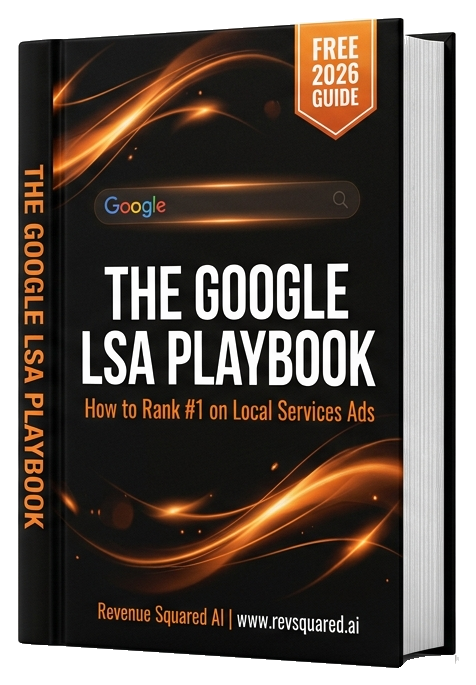
Try RevSquared free for 7 days.
Set up your agent in under 5 minutes. Live on your existing number. No contract.