You're spending money on Google Local Services Ads. You've got the Google Guaranteed badge. Your profile is complete. But your ad keeps showing up below competitors who have fewer reviews and have been running LSAs for less time than you.
What gives?
In most cases, the answer is simpler than you think — and it has nothing to do with your budget, your service area, or your reviews. It's your responsiveness. Specifically, how fast and how consistently you answer the phone.
Google has made responsiveness one of the heaviest-weighted ranking factors in the LSA algorithm. And most businesses are getting crushed by it without realizing why.
LSA ranking isn't a bidding problem — it's a phone problem. Answer every call in under 5 seconds and you outrank competitors with deeper pockets and longer review histories.
01How Google Actually Ranks Local Services Ads
Before we get into the fix, let's break down what Google looks at when deciding which LSAs appear at the top of the page. Unlike regular Google Ads where you bid on keywords and the highest bidder wins, LSA ranking is algorithmic. Google weighs multiple signals:
| Ranking Factor | Weight | Your Control |
|---|---|---|
| Responsiveness | Very High | Full control |
| Reviews & ratings | High | Moderate control |
| Proximity to searcher | High | No control |
| Business hours / availability | Medium | Full control |
| Profile completeness | Medium | Full control |
| Lead management speed | Medium | Full control |
| Bid strategy | Medium | Full control |
| Service selection | Low-Medium | Full control |
Notice something? Responsiveness sits at the very top — and it's the one factor where you have complete control. Proximity matters, but you can't move your office. Reviews matter, but you can't force customers to leave them. Responsiveness? That's entirely on you.
02The Responsiveness Problem Nobody Talks About
Here's the uncomfortable truth: 74.1% of calls to contractors go unanswered. That's not a guess — it's from a study of over 13,000 real calls to service businesses.
Think about what that means for your LSA ranking. Nearly three out of four calls ring out. Every single one of those missed calls is a negative signal to Google's algorithm. And the damage doesn't heal overnight.
The 90-Day Penalty
When you miss LSA calls, Google doesn't just ding you once. The algorithm retains that missed-call data for approximately 90 days. One bad week of missed calls — maybe you were slammed on a job, maybe your receptionist called in sick — and you're paying for it with lower rankings and fewer leads for three full months.
That's three months of:
- Your ad appearing lower on the page
- Fewer leads flowing in
- Higher effective cost per lead
- Competitors eating your market share
What Google Displays to Searchers
Google now shows responsiveness indicators directly on your LSA listing. When your business answers calls quickly, your listing displays "Typically responds in a few minutes" — a trust signal that dramatically improves click-through rates. When you don't? Searchers see weaker language, or worse, no responsiveness indicator at all.
This creates a compounding effect. Better responsiveness → higher ranking → more visibility → more clicks → more booked jobs → more reviews → even higher ranking. The flywheel spins faster for businesses that answer the phone.
Google's responsiveness score is a silent ranking kill-switch — two bad weeks of missed calls outweighs six months of five-star reviews.
03The 6 Google LSA Ranking Factors You Can Actually Control
Let's get specific about each controllable factor and how to optimize them.
1. Responsiveness (The #1 Factor)
Google tracks two things: your answer rate and your response time. Businesses with answer rates above 95% consistently outrank those hovering around 70-80%. The difference isn't subtle — it's often the difference between position #1 and not appearing at all.
What "good" looks like:
- Answer rate above 95%
- First response under 5 seconds
- Consistent performance 24/7 (not just during business hours)
- Letting calls go to voicemail
- Slow callbacks (even 30 minutes is too slow)
- Inconsistent coverage on nights and weekends
2. Reviews and Ratings
You need at least 50 reviews with a 4.5+ average to compete in most markets. But the unofficial benchmark for top-3 placement is 4.8+ stars. Google also weighs recency — a business with 100 reviews from last year ranks lower than one with 60 reviews from the past 3 months.
Action items:
- Ask every satisfied customer for a review within 24 hours of service
- Respond to every review (positive and negative)
- Never stop — stale review profiles decay in ranking
3. Business Hours and Availability
Businesses listed as "open" at the time of a search rank higher than those listed as closed. If someone searches for an emergency plumber at 2 AM, Google shows businesses with 24/7 availability first. Setting extended or round-the-clock business hours — and actually answering calls during those hours — is a ranking advantage.
4. Lead Management Speed
When a lead comes in through LSA, Google tracks how quickly you mark it as "Booked" or "Completed" in your LSA dashboard. Fast lead management signals to Google that you're an active, responsive business. Leaving leads sitting in your inbox for days hurts your ranking.
5. Profile Completeness
Upload high-quality photos of your work. Write a detailed business description. Complete every verification check Google offers. Enable every relevant service type and job category — Google doesn't infer services from your website. If it's not explicitly enabled in your LSA profile, you won't appear for those searches.
6. Bid Strategy
Google's "Maximize Leads" bidding mode generally outperforms manual per-lead bidding for ranking purposes. Higher bids win placement, but only when all other ranking factors are competitive. No amount of bidding overcomes a poor responsiveness score.
The six factors you can move are all operational — ranking higher is a business-discipline problem, not a marketing-budget problem.
04Why Traditional Solutions Don't Work
Most businesses try to solve the responsiveness problem with one of three approaches. All of them have critical flaws:
Hiring more staff: A full-time receptionist costs $35,000-$50,000/year, only covers business hours, calls in sick, takes lunch breaks, and can't handle call surges. You'd need 3+ people for true 24/7 coverage — that's $100K+ in payroll before benefits.
Traditional answering services: They take messages and promise callbacks. But Google's algorithm doesn't care about callbacks — it measures whether the initial call was answered and handled. A message-taking service that says "someone will call you back" doesn't qualify the lead, doesn't book the appointment, and doesn't give Google the fast-response signal you need.
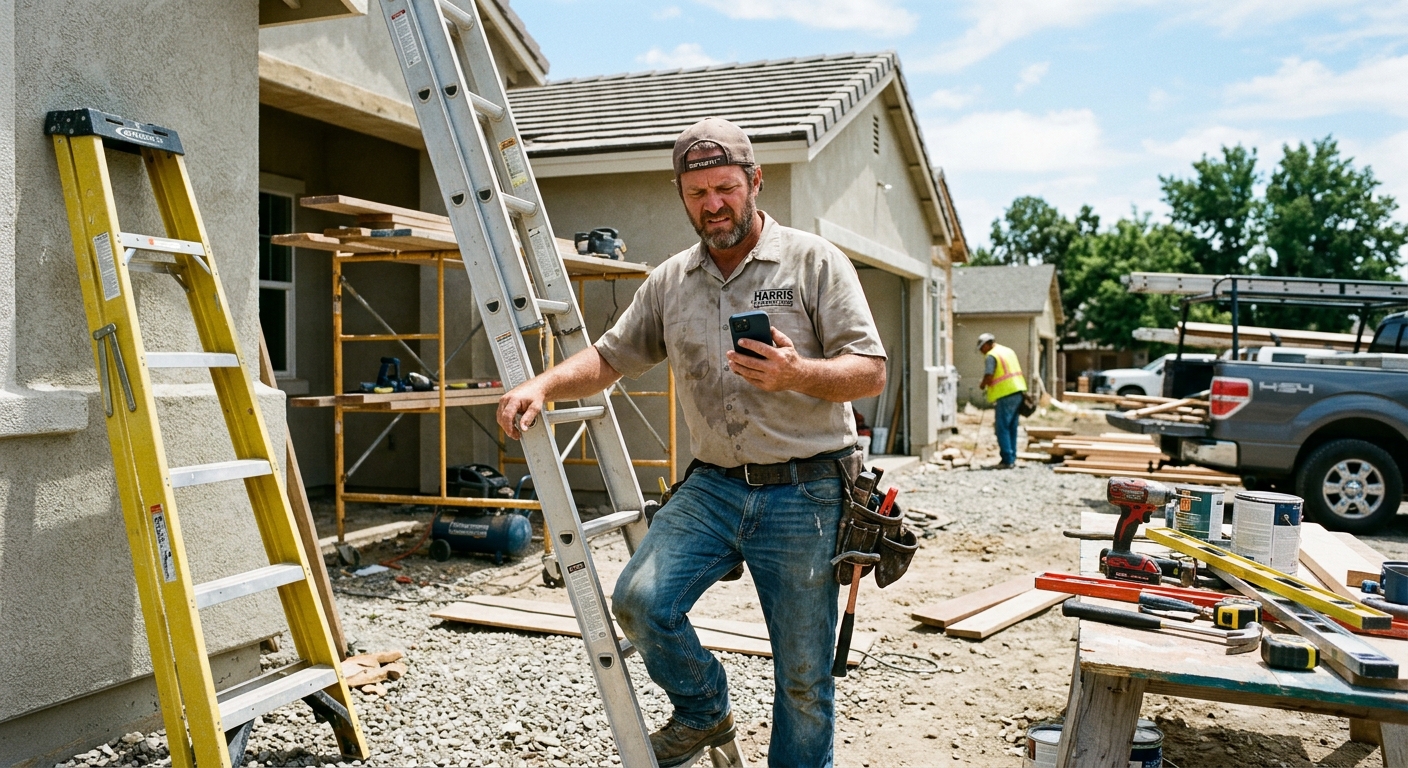
Call forwarding to your cell phone: This works until you're on a ladder, under a sink, in a meeting, or asleep. One glance at a ringing phone while you're with a customer and you've just missed another call. It's not scalable and it's not reliable.
None of these solutions deliver what Google actually measures: instant, consistent, 24/7 call answering with real engagement — not just message-taking.
One bad week of missed calls costs you 90 days of ranking. Google doesn't grade on a curve.
05How AI Phone Agents Solve the LSA Ranking Problem
This is where voice AI changes the equation entirely. An AI phone agent like Revenue Squared AI answers every single call in under 5 seconds. Not some calls. Not most calls. Every call. At 3 PM and at 3 AM. On Christmas Day and during your busiest Tuesday.
Here's what that means for each LSA ranking factor:
Responsiveness: 100% Answer Rate, Instantly
Your AI agent picks up every call before the second ring. It doesn't put callers on hold, doesn't let calls roll to voicemail, and doesn't miss calls while handling another one. Google sees a business that answers every inquiry within seconds — the strongest responsiveness signal possible.
Compare that to the industry average of 74% missed calls. You're not just beating your competitors — you're playing a completely different game.
24/7 Availability: Every Hour Is Business Hours
With an AI phone agent, you can legitimately set your LSA business hours to 24/7 — because you're actually answering calls around the clock. That 2 AM emergency search? Your listing appears at the top, and your AI agent answers, qualifies the lead, and books the appointment before the caller even considers your competitor.
Lead Qualification During the Call
Unlike answering services that take a message and promise a callback, an AI phone agent has a real conversation. It asks qualifying questions, captures caller information, checks your calendar availability in real time, and books appointments on the spot. The lead goes from "incoming call" to "booked job" in a single interaction.
This means faster lead management in your LSA dashboard and a stronger signal to Google that your business converts leads efficiently.
Automated Review Generation
After a completed job, your AI agent can follow up with customers and prompt them to leave a Google review. This keeps your review profile fresh and growing — the recency signal that sustains LSA ranking over time.
06The Math: What Improved LSA Ranking Actually Means
LSAs appear at the very top of Google search results — above regular Google Ads and above organic results. They account for approximately 13.8% of all SERP clicks when they appear. The average cost per lead across industries is roughly $60, with an average close rate of 31%.
Let's run a simple scenario:
Without AI (typical contractor):
- 100 LSA calls/month
- 26% answer rate (74% missed)
- 26 calls actually answered
- 31% close rate = 8 booked jobs
- Google ranks you lower due to poor responsiveness
- Fewer leads next month (the downward spiral)
- 100 LSA calls/month
- 100% answer rate
- 100 calls answered and qualified
- 31% close rate = 31 booked jobs
- Google ranks you higher due to top-tier responsiveness
- More leads next month (the upward spiral)
At $60/lead and a conservative $500 average job value, that's the difference between $4,000/month and $15,500/month in revenue. From the same LSA budget.
An extra receptionist costs $50K a year and still goes home at 5 — an AI phone agent covers the same shift for a fraction and never sleeps through a Saturday morning.
07How to Set Up an AI Phone Agent for Your LSA Calls
Getting started takes less than 5 minutes:
Step 1: Create your AI agent. Sign up for Revenue Squared AI and build a custom AI agent trained on your specific business — your services, pricing, service area, and scheduling rules.
Step 2: Connect your phone number. Forward your LSA calls to your Revenue Squared AI number, or use your existing business number. The AI agent answers every call with your business name and handles conversations naturally.
Step 3: Connect your calendar. Revenue Squared AI integrates with Google Calendar, GoHighLevel, and other scheduling tools so your AI agent books appointments in real time during the call — no callbacks needed.
Step 4: Set your LSA hours to 24/7. Because now you can. Your AI agent handles overnight calls, weekend calls, and holiday calls with the same quality as a trained receptionist.
Step 5: Watch your responsiveness score climb. Within days, Google sees the improvement. Within weeks, your LSA ranking starts moving up. Within a month, you're seeing measurably more leads from the same budget.
For a full walkthrough, see our step-by-step setup guide.
08Real Results: What Businesses See After Switching
The pattern is consistent across industries. Service businesses that switch to an AI phone agent for their LSA calls see:
- Answer rate jumps from 50-70% to 100% — immediately
- LSA ranking improvement within 2-4 weeks — as Google's algorithm registers the responsiveness change
- Lead volume increases 40-60% — from higher ranking and better click-through rates
- Cost per lead drops 25-35% — because higher ranking means more efficient spend
- Revenue per LSA dollar increases 2-4x — from converting calls that previously went unanswered
The contractors showing up in the top three LSA slots aren't spending more — they're answering faster and more consistently than the ones below them.
09The Bottom Line: Your LSA Ranking Is a Phone Problem, Not a Budget Problem
Most businesses throwing money at Google Local Services Ads are leaving the biggest ranking lever completely unaddressed. They're optimizing bids, tweaking service categories, and refreshing profile photos while 74% of their calls go unanswered.
Google's algorithm is telling you exactly what it wants: answer the phone, answer it fast, and answer it every time. The businesses that do this rank higher, get more leads, and pay less per lead. The ones that don't get pushed to the bottom of the page and wonder why LSAs "don't work."
An AI phone agent isn't a nice-to-have for LSA success. It's the single most impactful change you can make to your ranking, your lead volume, and your revenue from Local Services Ads.
Try Revenue Squared AI free — set up your AI agent in under 5 minutes today.
10Frequently Asked Questions
What is the most important Google LSA ranking factor?
Responsiveness — how quickly and consistently you answer calls — is the most heavily weighted controllable ranking factor. Businesses with 95%+ answer rates consistently outrank competitors. While proximity and reviews also matter, responsiveness is the factor where you have the most control and where most businesses underperform.
How long does a missed call hurt my LSA ranking?
Google's algorithm retains missed call data for approximately 90 days. A bad stretch of missed calls reduces your lead flow and increases your effective cost per lead for three full months. This is why consistent call answering matters more than occasional excellence.
Can an AI phone agent answer my Google LSA calls?
Yes. AI phone agents like Revenue Squared AI answer every call in under 5 seconds, 24/7. They qualify leads, book appointments during the call, and capture caller information — all of which signal strong responsiveness to Google's ranking algorithm.
How quickly will my LSA ranking improve with an AI phone agent?
Most businesses see responsiveness score improvements within days of switching. LSA ranking improvements typically follow within 2-4 weeks as Google's algorithm registers the consistent improvement. Full ranking recovery from a period of poor responsiveness takes up to 90 days.
Is Google LSA worth it for small businesses?
Yes — LSAs appear above all other results on Google, capture nearly 14% of SERP clicks, and operate on a pay-per-lead model (not pay-per-click). The average cost per lead is approximately $60 with a 31% close rate. For service businesses, LSAs typically deliver the highest ROI of any digital advertising channel — but only if you're answering the calls they generate.
What industries do Google Local Services Ads cover?
LSAs have expanded beyond the original home services categories. They now cover HVAC, plumbing, electrical, roofing, pest control, cleaning, landscaping, locksmith, law firms, dentists, veterinarians, real estate, financial planning, and dozens more. Google continues adding new industries regularly.
The 2026 Google LSA Playbook
Dominate your local competition, rank #1 on Google Local Services Ads, and turn Google into your top salesperson. Built for contractors.
Get It Free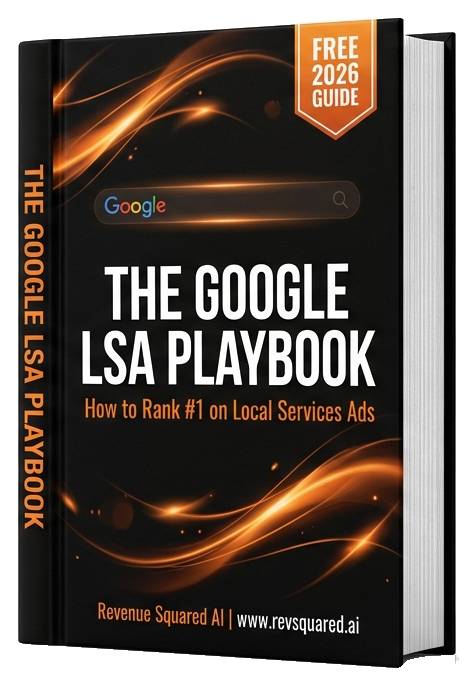
Try RevSquared free for 7 days.
Set up your agent in under 5 minutes. Live on your existing number. No contract.