Missed call recovery rate measures how many missed callers still book when you reach them back. From 60+ RevSquared customers: AI answering immediately converts at 75%. Callback within 10 minutes: 62%. One hour: 31%. Next morning: 11%. The sharpest decay happens in emergency trades — HVAC, plumbing, roofing — where callers need someone right now.
Every missed-call article tells you to answer faster. None of them show you the actual numbers by industry, or how fast those numbers fall. This post publishes the full decay curve — data from our 60+ active customers in HVAC, plumbing, dental, law, and cleaning services — so you can see exactly what each hour of delay costs you.
If you missed a call and it took more than an hour to call back, your odds of booking that job dropped by more than half. Wait until morning and you're working with an 11% shot. That number hits differently when your average job is $800.
For emergency trades — HVAC, plumbing, roofing — more than 85% of your recovery rate disappears between the 10-minute callback and the next-morning callback. The window is not forgiving.
01The 10-Minute Window That Separates Booked Jobs From Lost Revenue
Speed to lead has been studied for decades. A Harvard Business Review analysis on lead response found that companies contacting web leads within one hour were seven times more likely to have a meaningful conversation than those waiting two hours. That research measured form submissions. Phone calls move faster — the intent is higher, the alternatives are closer, and the decision decays faster.
A caller who dialed your number has already made a buying decision. They found your business, chose to call instead of filling out a form, and waited for you to answer. That is high-intent behavior. When the call goes to voicemail, the clock starts. Our data shows 62% of those callers will still book if reached within 10 minutes. That drops to 48% by 30 minutes.
The reason is not impatience — it is competition. That same caller almost certainly dialed the next result on Google. Within 10 minutes, the job is still available to win. After an hour, your competitor has likely already booked it.
According to CallRail's 2025 consumer research, 78% of consumers say they have abandoned a business after an unanswered call, and 82% say they called a competitor immediately after. The moment your call goes unanswered, two things happen in parallel — your recovery rate clock starts counting down and your competitor's phone starts ringing.

02Recovery Rate Decay: The Full Breakdown by Response Time
The table below shows what percentage of missed callers still book when reached at each response-time interval. Data from call logs across 60+ RevSquared customers in HVAC, plumbing, dental, law, and cleaning services, Q1–Q3 2026.
| Response time | Recovery rate | Drop from immediate answer |
|---|---|---|
| AI answers immediately | 75% | — |
| Called back within 10 minutes | 62% | −17% |
| Called back within 30 minutes | 48% | −36% |
| Called back within 1 hour | 31% | −59% |
| Called back within 4 hours | 19% | −75% |
| Called back next morning | 11% | −85% |
| Voicemail only / never called back | 4% | −95% |
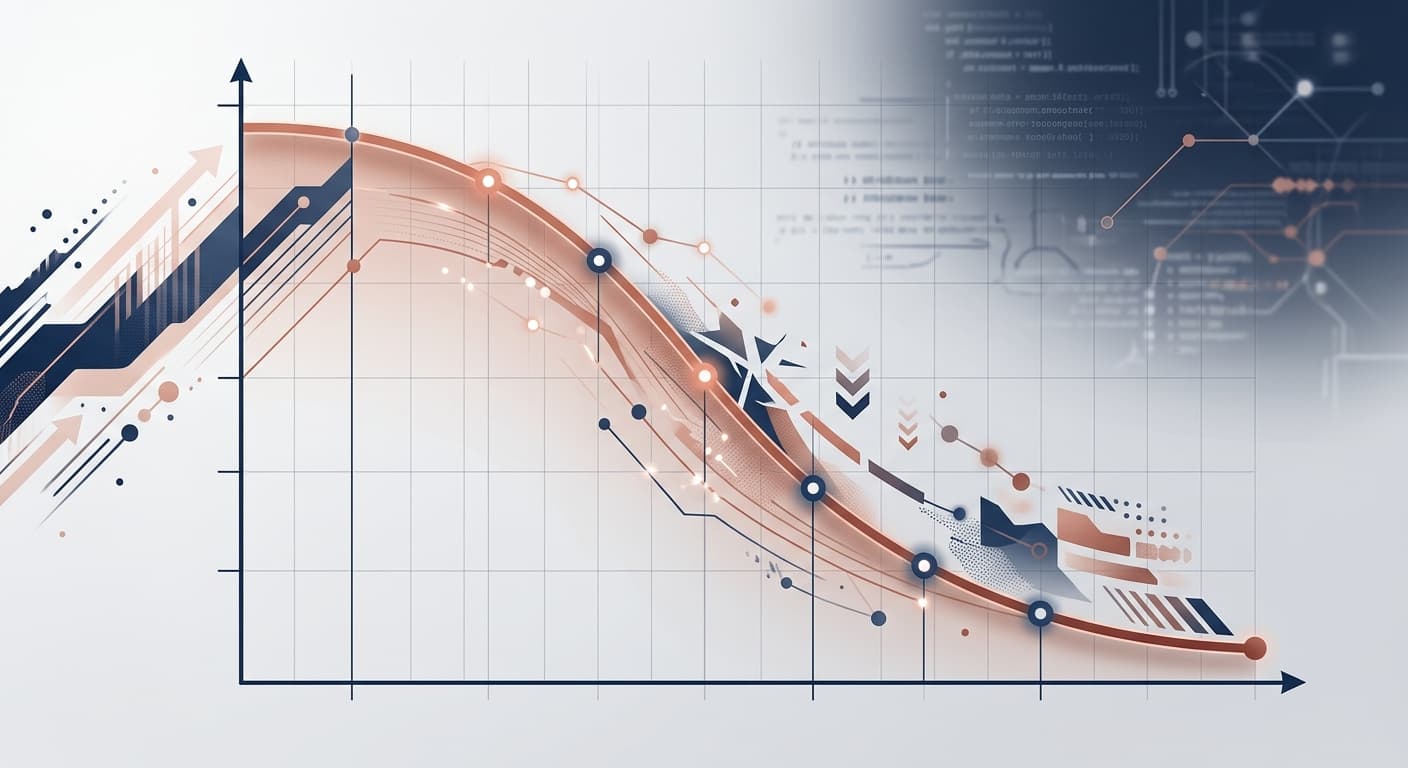
The slope is not linear. The steepest drop happens in the first hour — 44 percentage points lost between "answered immediately" and "called back in an hour." After that, each additional hour costs less in absolute terms, but the base is already gutted.
The 4% voicemail-only rate is not a rounding error. Roughly one in 25 callers who reach voicemail and never receive a callback will proactively call your business again. For most service businesses, that number is effectively zero — and every shop counting on voicemail to save those leads is operating on that assumption.
One hour after a missed call, you have a 31% chance of booking the job. The caller had a 100% chance of buying from someone.
03Recovery Rates by Industry: Why Your Vertical Determines Your Urgency Window
The aggregate numbers mask significant differences by industry. Emergency-demand businesses — where the caller has an active, immediate problem — show far steeper decay than appointment-based businesses where scheduling flexibility exists.
| Industry | Recovery rate < 10 min | Recovery rate next morning | Urgency driver |
|---|---|---|---|
| Plumbing (emergency) | 71% | 6% | Active leak or failure — caller books within hours |
| HVAC (peak season) | 68% | 8% | AC out in July — calling every contractor on the list |
| Roofing (storm season) | 64% | 9% | Weather damage — contractors book out in hours |
| Law firms | 58% | 19% | Time-sensitive legal issue — alternatives take days to schedule |
| Dental practices | 52% | 28% | Pain or cosmetic concern — patient but still price-shopping |
| Cleaning services | 49% | 31% | Lower urgency — scheduled work, caller has flexibility |
The plumbing number is the most stark. A plumber who misses a call and returns it the next morning has a 6% chance of booking the job. The other 94% found someone else within hours. This is not a hypothetical — this is what happens every night a plumbing shop relies on voicemail.
HVAC contractors operating during peak season face the same dynamic at scale. Our full HVAC breakdown shows that call volume during the top 10 hottest days of the year typically runs 3–4x normal — which means missed calls are 3–4x more expensive per call than the annual average. For the full picture on how the HVAC industry loses more revenue per missed call than any other vertical, the industry page has the cost model.
Dental and cleaning services have flatter decay curves not because clients are more loyal, but because the need is less urgent. A missed call from an HVAC customer on a July afternoon is a fundamentally different event than a missed inquiry about house cleaning availability.
04The Dollar Math: What a 24-Hour Delay Costs a Trade Business
Knowing the rates is one thing. Seeing the revenue impact is another.
For a mid-sized HVAC contractor missing 8 calls per day during peak season — a conservative estimate during heat waves, when call volume spikes:
| Scenario | Recovery rate | Bookings recovered | Avg ticket ($850) | Daily revenue |
|---|---|---|---|---|
| AI answers immediately | 75% | 6.0 | $850 | $5,100 |
| Callback within 10 minutes | 68% | 5.4 | $850 | $4,607 |
| Callback next morning | 8% | 0.6 | $850 | $544 |
| Voicemail only | 4% | 0.3 | $850 | $272 |
The difference between AI answering immediately and voicemail-only is $4,828 per day. Over a 90-day peak season, that gap is $434,520 in recoverable revenue.
Even the gap between "callback within 10 minutes" and "voicemail only" — which most operators think is manageable — is $4,335 per day. Every hour that callback list sits unworked is another notch down the decay curve.
For a dental practice missing 10 calls per day at a $280 average appointment value, the math runs differently but the direction is the same. The gap between immediate answer (75%) and next-morning callback (28%) works out to roughly $1,300 per day — or approximately $330,000 over a full year.
The gap between answering a call and returning it the next morning is not one night of delay. It is a 92% drop in the probability that caller ever becomes your customer.
05How AI Eliminates the Decay Curve Entirely
The data above describes a world where a human has to remember to call back, find time between jobs, and recall what the caller wanted. That world is full of gaps — the busy afternoon, the Friday evening, the crew that forgot the callback stack on the front desk.
Revenue Squared AI answers every call immediately, 24/7. Not "routes to voicemail and sends a text-back." Answers — has a full conversation, qualifies the caller, and books the appointment directly into your calendar. There is no missed call to recover from. Every caller starts at the top of the decay curve, where 75% of them book.
The other thing our platform does that humans cannot consistently do: it gets better based on what it hears. A RevSquared agent that gets pushback on pricing on Tuesday can be updated in plain English by Wednesday morning — no developer, no prompt rewrite, no support ticket. Type "when callers mention they're getting other quotes, ask about our 24-hour response guarantee" and it is live in minutes. That adaptive loop is why 75% is a floor, not a ceiling.
For home service businesses handling more than three inbound calls per day, the math on our Starter plan at $147/month + $0.25/min closes in a single recovered booking. For businesses running multiple locations or needing CRM integration, the Pro plan at $497/month + $0.20/min adds multi-location agents, voice cloning, and advanced reporting. No annual contracts on either tier.
If you want to estimate your missed-call revenue exposure before making a decision, use our Missed Call Cost Calculator — plug in your call volume, average ticket, and current callback speed, and it models the gap in dollars.
The best AI answering service guide for small business covers how to evaluate options across the market, including what to look for beyond recovery rate alone.
06Bottom Line
Missed call recovery rate is not a soft metric — it is a direct multiplier on every inbound call's revenue value. Every hour of delay cuts the probability of booking that caller. Emergency trades see the steepest curves: HVAC, plumbing, and roofing show next-morning callback rates of 6–9%. Dental and cleaning services have more runway, but still lose half their recovery rate within the first hour.
The fix is not a faster callback process. It is eliminating the concept of a missed call. An AI that answers every call immediately stays at 75% conversion — with no dependency on staff availability, callback lists, or peak-season headcount.
Start your 7-day free trial and take the decay curve off the table permanently.
07Frequently Asked Questions
What is a good missed call recovery rate?
A recovery rate above 60% is strong — it typically requires reaching callers within 10 minutes of the missed call. Most businesses using manual callback processes land between 15% and 30%, because real-world delays average 45–90 minutes. AI that answers calls immediately consistently delivers 70%+ conversion because there is no recovery process — the call was never missed in the first place.
Which industries have the worst missed-call recovery rates?
Emergency trade businesses suffer the most: plumbing, HVAC, and roofing see next-morning callback recovery rates of 6–9%. Callers have an immediate, time-sensitive need and call multiple businesses simultaneously. The first company to answer wins the job. By the next morning, 91–94% of those callers have already booked elsewhere.
How does response time affect missed call recovery?
The relationship is not linear — most of the damage happens in the first hour. Going from immediate answer (75%) to a one-hour callback (31%) costs 44 percentage points. Going from one hour to next morning costs another 20. Beyond 24 hours, recovery rate is 4–6% regardless of industry. The first 60 minutes after a missed call determine most of the outcome.
Can text-back systems substitute for answering the call?
Text-back improves on voicemail-only but falls short of a live answer for two reasons. First, not all callers respond to texts — particularly older demographics in trades and legal services. Second, a text opens a conversation; it does not close a booking. In our data, SMS-only follow-up systems land at roughly 20–25% recovery — better than voicemail, but far below immediate AI answering. The most effective pattern is AI that answers the call first, then sends a booking confirmation by text.
What does missed call recovery look like for law firms?
Law firms see a more gradual decay than trade businesses: 58% recovery within 10 minutes, 19% by the next morning. The slower curve reflects the nature of legal intake — callers typically have fewer immediate alternatives and are willing to wait for a specific firm. That said, 19% next-morning recovery still means 81% of callers have moved on. The AI receptionist for law firms guide covers the intake patterns that matter most for legal practices.
The 2026 Google LSA Playbook
Dominate your local competition, rank #1 on Google Local Services Ads, and turn Google into your top salesperson. Built for service businesses.
Get It Free
Try RevSquared free for 7 days.
Set up your agent in under 5 minutes. Live on your existing number. No contract.