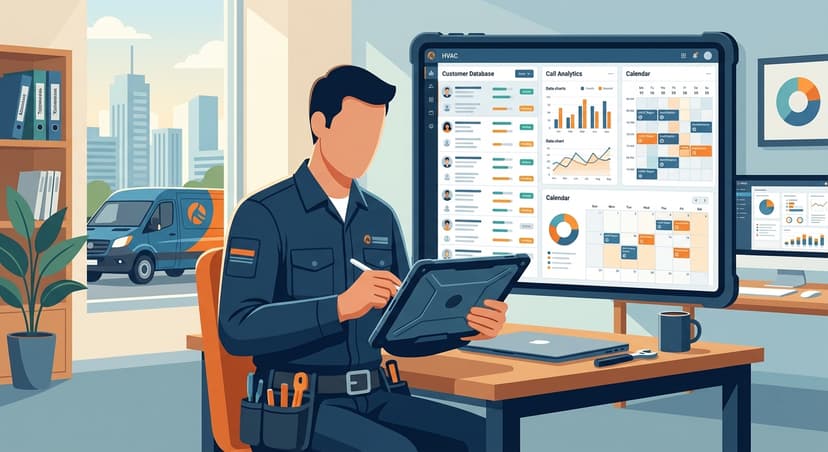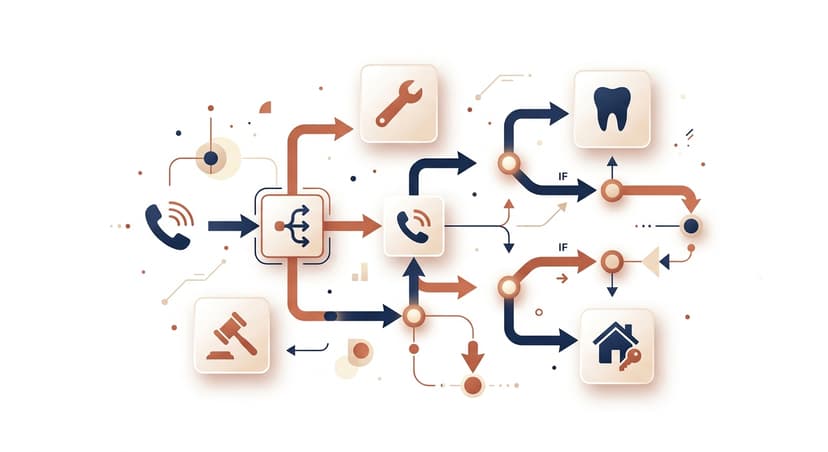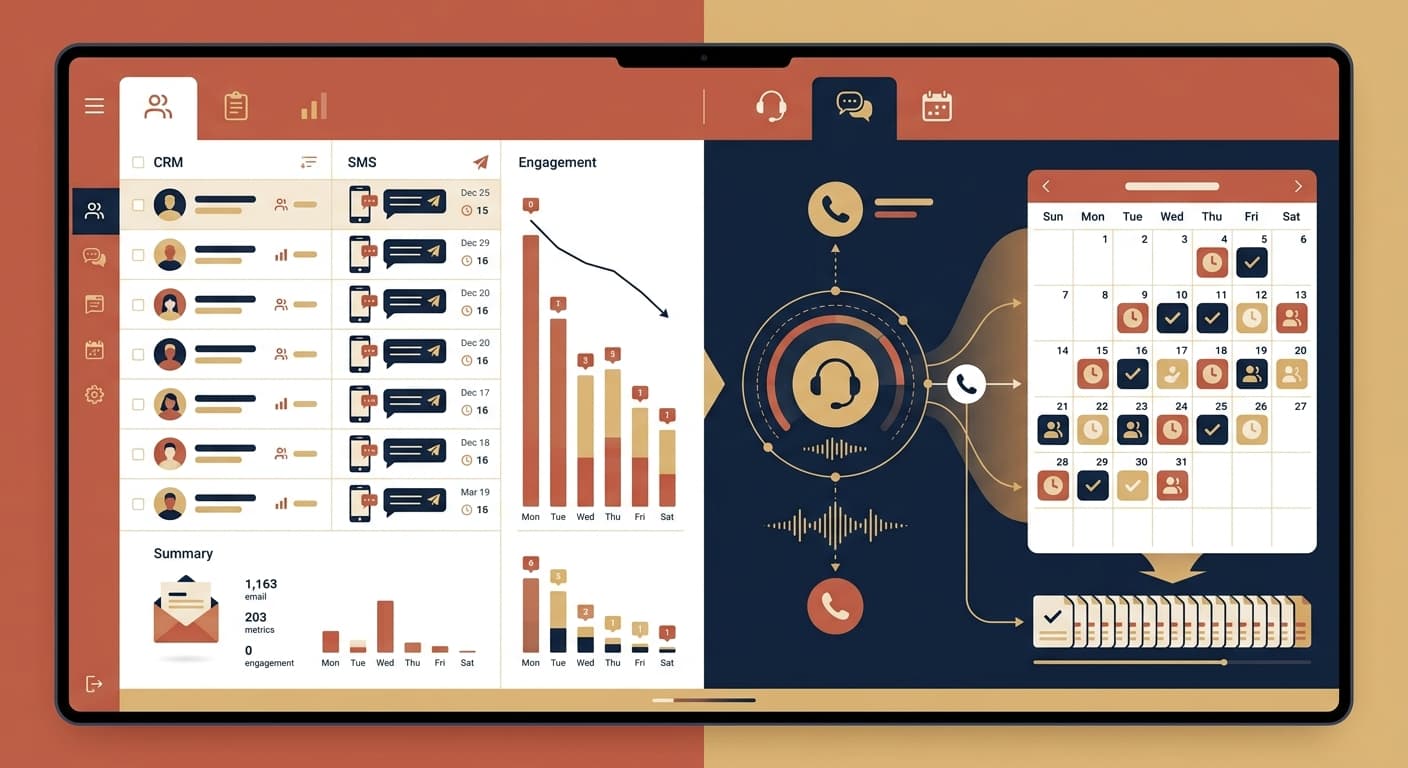
Database reactivation tools automate outreach to dormant CRM contacts — leads who inquired and went cold. The best platforms combine SMS-first sequences, AI voice follow-up, and direct calendar booking. GoHighLevel handles SMS automation; ServiceTitan triggers recall campaigns; Revenue Squared AI is the only platform that runs all three steps and self-improves its pitch after every call.
Your CRM is hiding revenue. The average home service business sits on 2,000 to 10,000 contacts who called, requested a quote, or booked once — then went quiet. According to Harvard Business Review, reactivating an existing contact costs 5 to 25 times less than acquiring a new one. The problem is not the leads. The problem is that most "reactivation tools" cannot carry a contact from your CRM to a confirmed appointment.
They send a text. They do not hold a conversation. They do not call the person who replied "maybe." They do not book anything.
Every reactivation tool can start the conversation. Almost none of them can finish it. The tool that matters is the one that handles the reply, makes the follow-up call, and books the appointment — without a human in the loop.
01Why Most "Reactivation Tools" Stop at the Text
Search "database reactivation tools" and you will get roundups of Mailchimp, Klaviyo, and ActiveCampaign. These are email marketing platforms. They are useful for SaaS companies running win-back drip sequences. They are the wrong category for a service business with a CRM full of leads who never converted from a quote.
A roofing company with 8,000 dormant leads does not need a drip campaign. They need a tool that can contact all 8,000 people in 48 hours, identify the 400 who respond with "yeah I was actually going to call you," and turn those 400 into booked estimates — before they call someone else.
Email open rates for reactivation campaigns average 12–18% according to Mailchimp's industry benchmarks. Of those openers, roughly 2–4% click through. For a list of 8,000 contacts, you might drive 16 to 58 actual clicks. That is not a reactivation campaign. That is a newsletter.
SMS changes the math. Text messages have a 98% open rate and a 45% response rate on average. The problem is what happens next. An SMS blast says "reply YES if interested" — and then what? If 400 people reply and you have no automated follow-up, your sales team drowns. If 400 people reply and your automated follow-up is another text, the ones who need a real conversation to commit will fall off.
Voice follow-up is the piece most tools miss entirely. Our breakdown of how AI voice reactivation outperforms email drips covers the contact-rate math in detail — including why voice pickup rates average 40–60% on warm numbers while email open rates sit at 12–18%.
02The 5 Criteria That Separate a Real Reactivation Tool
Not all reactivation platforms are built for the same job. Before comparing options, here is the framework for evaluating whether a tool can carry a contact from dead to booked:
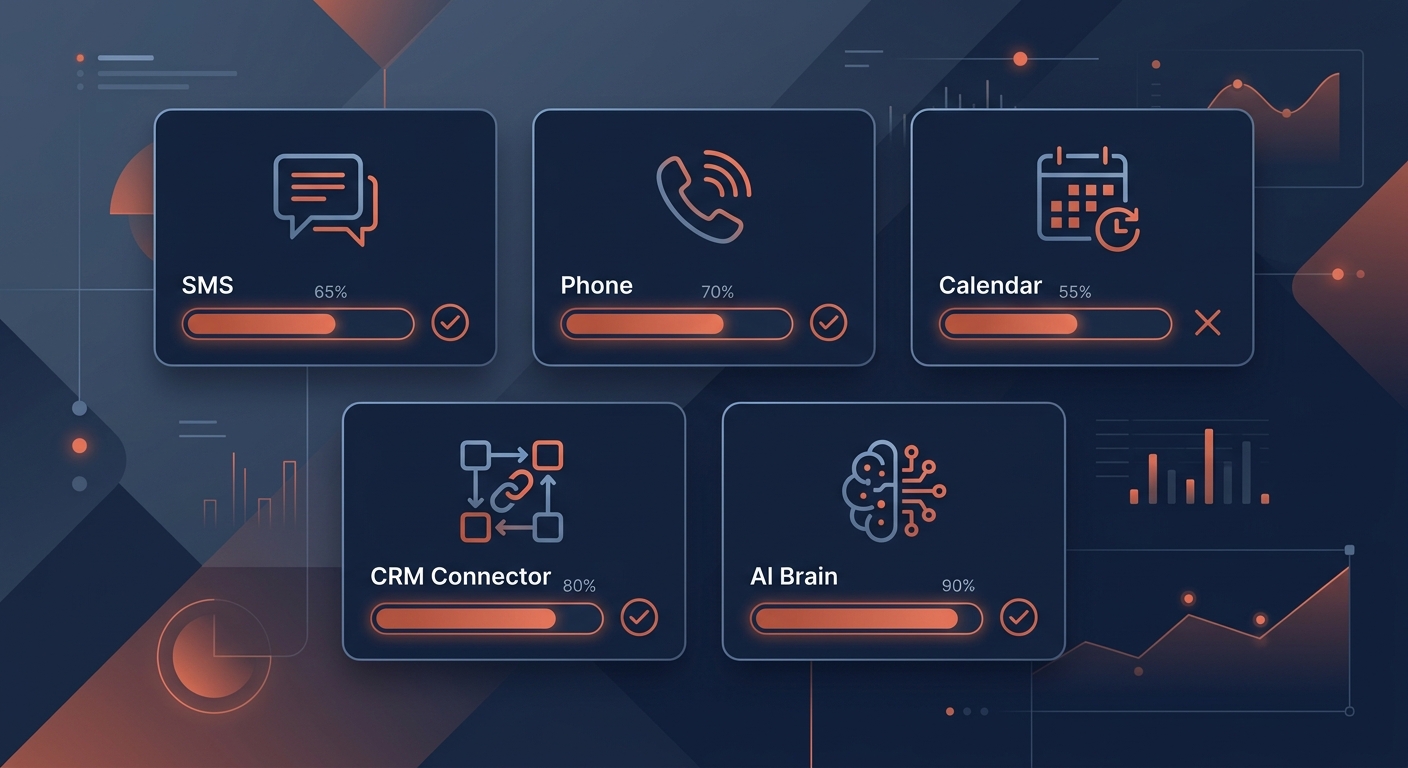
1. SMS-first outreach — can it send personalized text messages at scale, without manual effort per contact? 2. Conversational reply handling — does it understand and respond to replies, or does it just detect YES/NO keywords? 3. Voice follow-up for warm responders — can it make outbound calls to contacts who engaged with the text? 4. Appointment booking — does it book directly into a calendar, or does it just log a "hot lead" and hand off? 5. Self-improving logic — does the system learn what messaging works, or does every campaign start from scratch?
Here is how the main options compare across those five criteria:
| Criteria | Revenue Squared AI | GoHighLevel | ServiceTitan | HouseCall Pro |
|---|---|---|---|---|
| SMS outreach at scale | ✓ | ✓ | ✓ (recall only) | ✓ (basic) |
| Conversational reply handling | ✓ AI | Keyword-based | No | No |
| AI voice follow-up | ✓ | Requires 3rd party | No | No |
| Direct appointment booking | ✓ | Requires custom build | No | No |
| Self-improving AI | ✓ | No | No | No |
| Monthly starting cost | $147/mo + $0.25/min | $97/mo + agency fees | Bundled in CRM plan | Bundled in CRM plan |
| Setup time for reactivation | Under 10 min | 20–40 hrs+ | Built into platform | Built into platform |
The tools built for home service operations handle dispatch and billing well. The tools built for marketers handle broadcast well. None of them close appointments on their own — except one.
03GoHighLevel — Built for Agencies, Not for Operators
GoHighLevel is the most capable self-serve reactivation platform on the market. It can send SMS sequences, trigger workflows based on reply keywords, and connect to calendar tools for booking. If you have an agency building campaigns for you — or you are willing to spend 20–40 hours learning the platform — GHL can do a lot.
The catch is the word "can."
GHL is a toolbox, not a finished tool. The SMS sequences start blank. The reply-handling logic is keyword matching, not conversational AI. Voice follow-up requires either a human or a third-party voice AI integration bolted on separately. The booking step requires a custom workflow you build yourself. Every piece of intelligence that makes a campaign work — the script, the segmentation, the timing, the objection handling — you provide.
For a roofing company owner managing crews and coordinating subs, building a GHL reactivation stack is a second job. For an HVAC operator trying to fill a slow week, hiring an agency to build it costs $1,500 to $5,000 upfront plus $97–$297/month for the platform — and the campaign still requires manual call review afterward.
GoHighLevel's per-minute voice AI rate is lower than RevSquared's on paper. What GHL does not price is the 20–40 hours of initial configuration, the agency retainer to maintain it, or the leads that fall off because keyword-matching logic said "NO" to a reply that meant "call me this week."
For a full look at how GHL and RevSquared differ beyond reactivation, see our GoHighLevel Voice AI vs RevSquared comparison.
04ServiceTitan and HouseCall Pro — Field CRMs That Don't Close the Loop
ServiceTitan and HouseCall Pro are the dominant CRMs for HVAC, plumbing, electrical, and home service businesses. Both have "recall" or "marketing" features that trigger outreach to customers who have not booked in a set number of months. These are the most common reactivation tools already in use across the trades — and they consistently underperform.
The core problem: "recall" in these platforms means an automated email or postcard. It does not mean a text conversation. It does not mean a voice call. It definitely does not mean an AI that can hold a conversation, handle an objection, and book an estimate on the spot.
ServiceTitan's recall campaigns produce response rates most operators describe as disappointing — not because the leads are dead, but because an email that says "it's time for your annual tune-up!" is easy to ignore. The same contact, reached by a voice AI that uses their name, references their last service, and offers a specific slot Thursday afternoon, converts at 12–20%. The lead is identical. The tool is different.
HouseCall Pro's automation is even more limited — primarily triggered SMS reminders for customers with upcoming or recent jobs, not a full reactivation sequence for contacts that have gone cold 6 to 24 months out.
If you are already on ServiceTitan or HouseCall Pro, those platforms are not the answer to a dormant list problem. They are the answer to running an active service business. For CRM-wide reactivation on contacts that have not been touched in months, you need a dedicated reactivation tool running alongside them — not instead of them.
ServiceTitan runs your operations. HouseCall Pro handles your job scheduling. Neither one is a reactivation engine for a cold CRM list. The right answer is a dedicated tool that works alongside your field CRM, not a feature buried inside it.
05How Revenue Squared AI Runs the Full Pipeline
Revenue Squared AI handles the entire reactivation sequence from first contact to booked appointment, without requiring the business owner to build anything.
Here is how a campaign runs on RevSquared:
1. Upload your dormant contact list — CSV or direct CRM pull. The AI segments by lead age, last touchpoint, and service category. 2. SMS outreach launches automatically, personalized with each contact's name, last service type, and a specific offer. No template-blasting. 3. Conversational AI handles replies in real time. "What's the price on a tune-up?" gets a real answer. "I'm not interested right now" gets a soft follow-up scheduled 30 days out. 4. The AI calls warm responders — contacts who replied but have not booked — using a voice agent that holds a natural conversation, handles objections, and offers appointment slots. 5. Bookings go directly into Google Calendar, GoHighLevel, or your CRM. No hot-lead handoff. No "someone will call you." 6. After every campaign, the AI analyzes what worked — which opening lines drove replies, which objection responses converted, which call times produced pickups — and adjusts the next campaign automatically.
The plain-English tuning is what separates this from every other platform in this comparison. After a campaign closes, you can type "stop mentioning the $89 tune-up on new contacts — only use it for contacts from 2024" and the system updates immediately. No prompt engineering. No dev ticket. No waiting.
Metro HVAC ran their first RevSquared reactivation campaign on a list of 3,200 dormant contacts. They booked 47 appointments in the first 72 hours and attributed $38,000 in closed revenue to that list within 30 days. Their prior tool was ServiceTitan recall email. The list was the same. The tool was different.
To see the ROI math before you launch, use our reactivation ROI calculator. For a deeper look at where the average service business loses revenue before a contact even hits the reactivation list, the best AI answering service guide for small business is the right next read.
Ready to run your first campaign? Start a free trial at platform.revsquared.ai — setup takes under 10 minutes and you can launch a campaign the same day.
47 appointments in 72 hours on a list Metro HVAC had already written off. Same contacts that went cold on ServiceTitan recall email. The only thing that changed was whether the tool could hold the conversation.
06Frequently Asked Questions
What is the best tool for database reactivation for home service businesses?
For home service businesses that need a full-pipeline reactivation tool — SMS, voice follow-up, and appointment booking in one system — Revenue Squared AI is the only platform that covers all three steps natively. GoHighLevel is a strong option for businesses with an agency partner who can build and manage the workflows. ServiceTitan and HouseCall Pro are not reactivation tools in any meaningful sense; they are field CRMs with broadcast features added on.
Can I use GoHighLevel for database reactivation without an agency?
Yes, but plan for 20–40 hours of initial setup. GHL's SMS automation is excellent, but building the reply-handling logic, voice follow-up workflows, and booking integration requires significant technical configuration. Most solo operators spend weeks on setup before running a functional campaign. If you want a system that works on day one, RevSquared handles configuration in under 10 minutes.
Do ServiceTitan or HouseCall Pro handle database reactivation?
Both platforms have recall and marketing automation features, but they are primarily email and SMS broadcast tools — not conversational reactivation systems. They work well for re-engaging recent customers (90–180 days inactive) with seasonal reminders. For a cold list of contacts that are 6 to 24 months dormant, you need a dedicated reactivation tool running alongside your field CRM. See our HVAC-specific reactivation guide for the exact stack we recommend for trade contractors.
How much does a database reactivation campaign cost?
Costs vary by tool and list size. GoHighLevel starts at $97/month for the platform, plus agency build fees from $1,500 to $5,000 for initial setup. ServiceTitan and HouseCall Pro include basic recall features inside existing CRM plans. Revenue Squared AI runs reactivation through its Starter plan at $147/month + $0.25/min for voice calls, or the Pro plan at $497/month + $0.20/min for multi-location operations and advanced reporting. No annual contracts on any RevSquared tier.
What response rate should I expect from a reactivation campaign?
On a well-segmented list of leads aged 3–18 months, SMS-first reactivation campaigns typically achieve 15–35% response rates. Voice follow-up on warm responders — contacts who replied to the text — converts at 30–50% to booked appointments. Contacts aged 18–36 months convert at lower rates (8–15%), but remain profitable when your average job ticket is above $500. The full breakdown of response-rate benchmarks by industry and contact age is in our step-by-step reactivation campaign guide.
The 2026 Google LSA Playbook
Dominate your local competition, rank #1 on Google Local Services Ads, and turn Google into your top salesperson. Built for home service contractors.
Get It Free
Try RevSquared free for 7 days.
Set up your agent in under 5 minutes. Live on your existing number. No contract.